CBRN Shelters, Components & Protection Services — Engineered for the Same Threats Our Antidotes Treat
CBRN-rated underground shelters and residential safe rooms with NBQ-grade filtration, decontamination, and triple-redundant communications — delivered across the MENA region through our exclusive marketing cooperation. Confidential delivery for ministries, embassies, critical infrastructure, and private clients.
One company. Every threat vector. Exclusive marketing cooperation across the MENA region.
Golden Hour Pharma is proud to announce that, alongside our established pharmaceutical countermeasures and emergency-response programmes, we now operate as your one-company partner for chemical, biological, radiological, nuclear, EMP, and broader emergency-response threats. Our CBRN shelters and panic rooms are delivered through an exclusive marketing cooperation across the entire MENA region — a single trusted partner for ministries, embassies, critical-infrastructure operators, and private clients planning institutional or family preparedness.
Complete Offering — At a Glance
One Partner — Shelters, Components & Services
The widest CBRN protection catalogue in the MENA region — assembled under a single exclusive marketing cooperation and delivered as one accountable engagement.
CBRN preparedness is a layered discipline. Pharmacological countermeasures — Potassium Iodide, Potassium Iodate, and Prussian Blue — protect the body once radiological exposure has already happened. A purpose-engineered shelter is the upstream layer that stops that exposure from occurring in the first place.
Golden Hour Pharma delivers bespoke CBRN-rated bunkers and panic rooms across the MENA region through an exclusive marketing cooperation with a specialist shelter engineering group. We serve ministries planning continuity-of-government facilities, embassies and consulates with diplomatic protection mandates, critical infrastructure operators hardening sites of strategic interest, and private clients — family offices and high-net-worth individuals — who require discreet, professionally engineered shelter on residential or estate sites.
Up to 24
Occupants per configuration
500 m³/h
NBQ-filtered air capacity
Sized to spec
Battery autonomy (configuration-tuned)
3-line
Redundant communications
One Mission, Three Layers
Built for the Same CBRN Mission
Pharmacology, decontamination, and physical shelter — three disciplines under one MENA partner.
Layer 1
Pharmacological Countermeasures
Pharmaceutical-grade thyroid blockers (KI, KIO3) administered for radioiodine exposure during nuclear emergencies.
Every Golden Hour Pharma shelter is engineered against a defined spectrum of contemporary threats — from nuclear and biological events through electromagnetic pulse and civil unrest.
Nuclear
Radioactive fallout, ionising radiation, and contaminated particulate originating from weapons detonation, reactor failure, or dispersal devices. Countered through mass shielding, HEPA-grade air handling, and pressurised seals.
Biological
Airborne bacteria, viruses, weaponised pathogens, and biological spores. Excluded by H14-class HEPA filtration, hermetically sealed envelopes, and a dedicated decontamination airlock on every entry path.
Chemical
Warfare-grade chemical agents, toxic industrial vapours, and combustion smoke from urban events. Adsorbed by impregnated activated-carbon stages while positive interior overpressure prevents outside air from migrating inward.
Electromagnetic (EMP / HEMP)
High-altitude EMP and intentional electromagnetic interference capable of disabling unshielded electronics. Mitigated through Faraday-shielded enclosures and surge-suppressed service penetrations.
Climate & Environmental
Wildfire smoke, dust storms, prolonged extreme temperatures, and extended utility loss. Buffered by a thermally insulated envelope, sealed ventilation, and self-sufficient life-support.
Civil Unrest & Forced Entry
Armed intrusion, coordinated attacks, and prolonged siege conditions tied to social instability. Resisted with reinforced ballistic walls, hermetic access doors, multi-factor authentication, and silent-alarm communications.
The Range
Six Configurations, One Engineering Standard
Five modular underground configurations from 6 to 24 occupants, plus a residential panic room. Every configuration is built to the same construction and life-support standard.
Our compact entry-level module. Built on a single ISO-20 container footprint, the ISO-20 Basic is dimensioned for short-stay protection or as an auxiliary unit linked to a larger configuration. The welded carbon-steel structure, three-coat bituminous waterproofing, and 40 mm tri-layer insulation deliver a comfortable interior despite the dense build envelope.
Dimensions
6.06 × 2.44 × 2.59 m
Structure
80×80×2.5 mm welded carbon steel tube, reinforced for external pressure
Exterior coating
6 mm sheet metal with three coats of bituminous waterproofing
Interior insulation
40 mm tri-layer panels (thermal + acoustic)
Interior layout
Configurable storage, rest, and multi-purpose areas; 80 mm insulating partitions
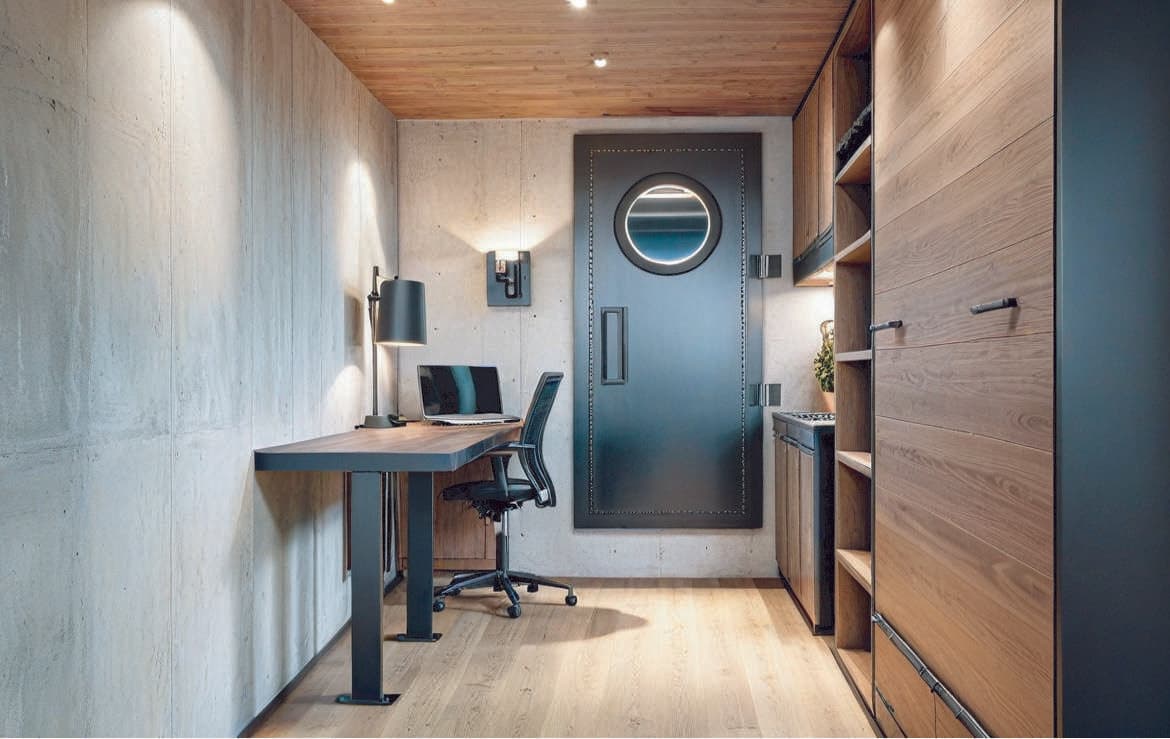
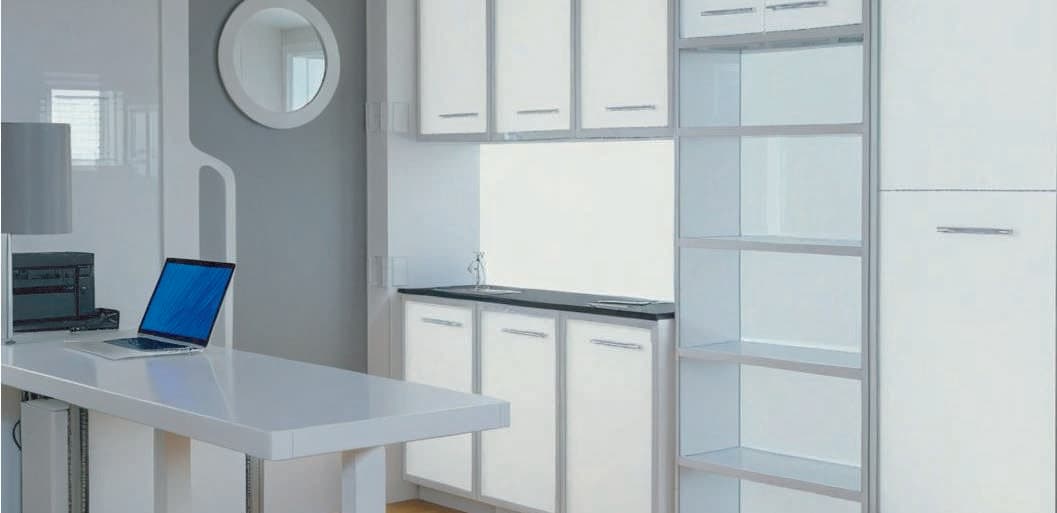
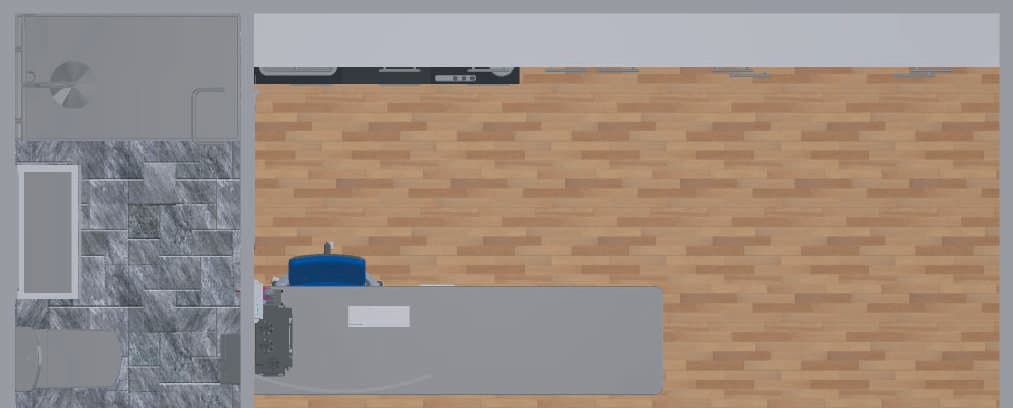
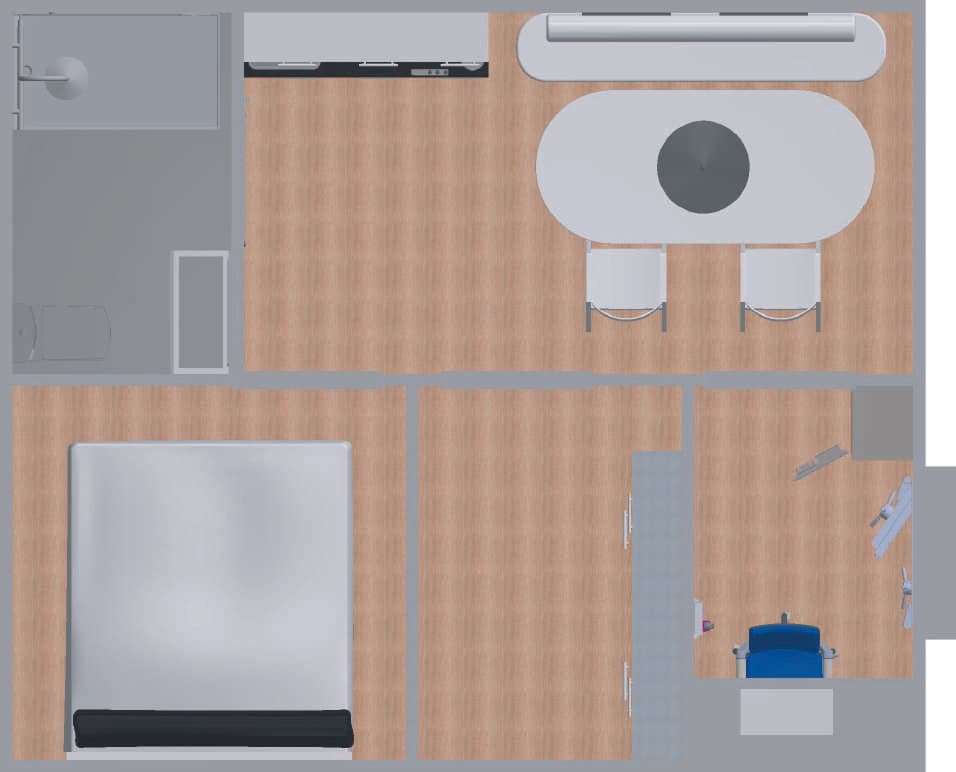
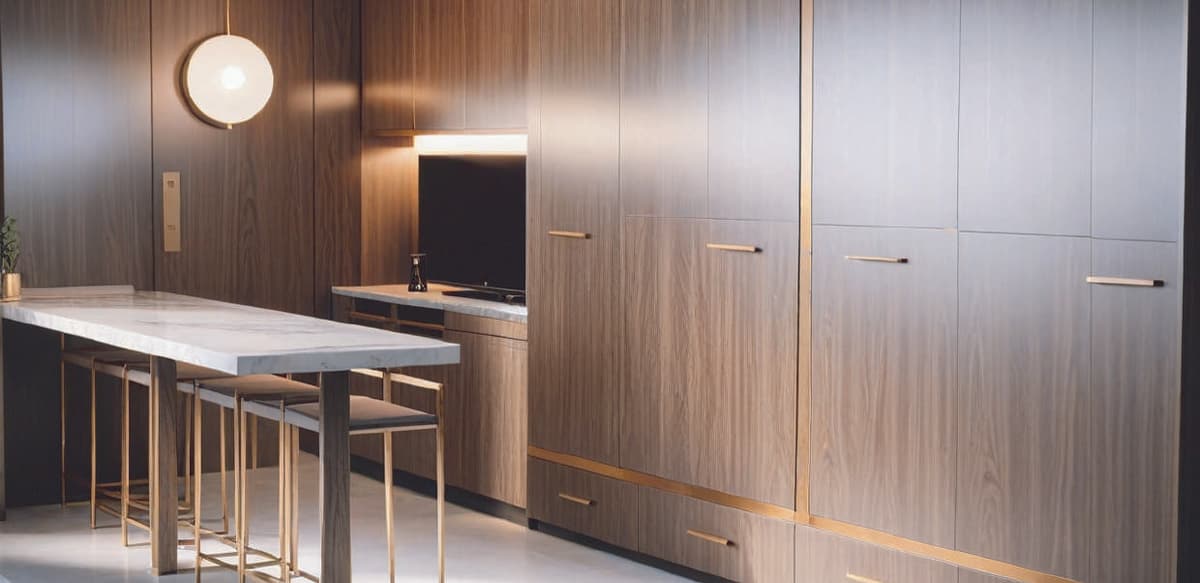
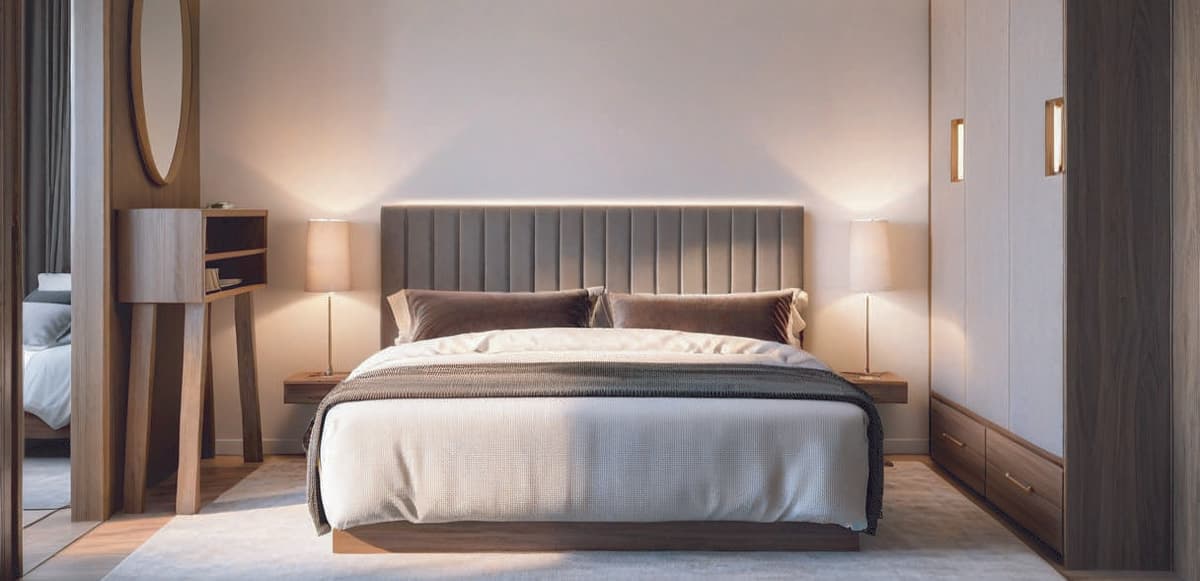
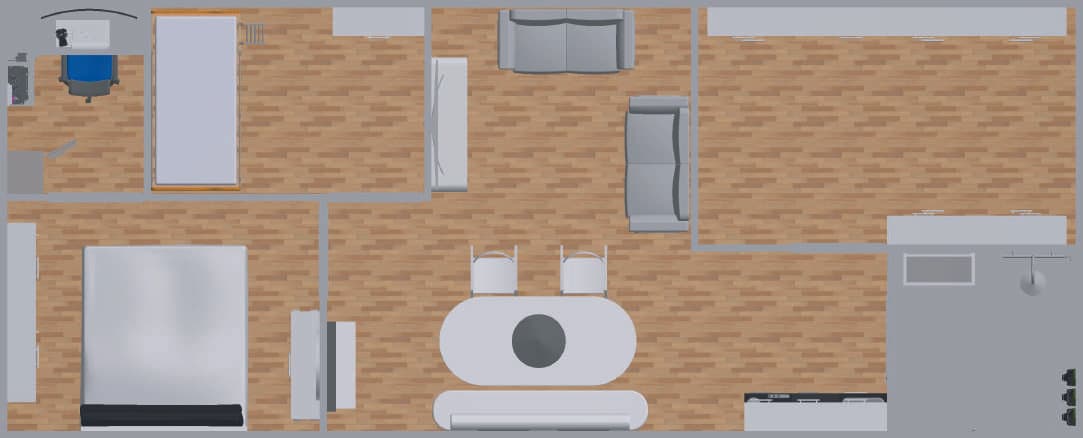
Two ISO-20 modules linked in parallel to double the usable floor area. The ISO-20 Double is the most frequently requested family-scale configuration, gathering bedroom, living area, kitchenette, sanitary block, and life-support equipment into one coherent space. A reinforced joint at the module interface delivers full structural continuity across both shells.
Dimensions
6.06 × 4.88 × 2.59 m
Structure
Reinforced carbon-steel joint between modules for full structural continuity
Exterior coating
6 mm sheet metal, three-coat bituminous waterproofing
Interior insulation
40 mm tri-layer panels on walls and ceiling
Interior layout
Bedroom + common area configurations; integrated inter-module access
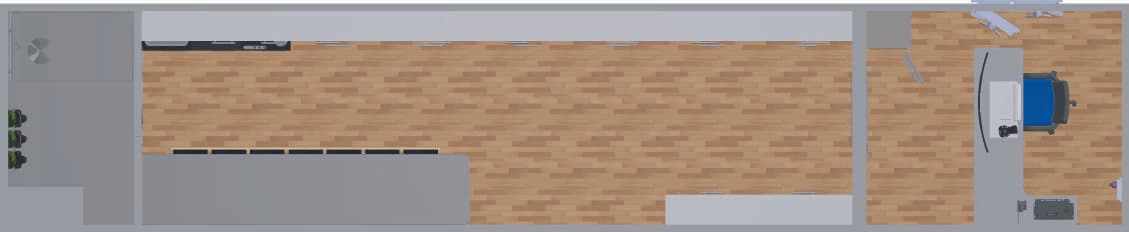
Single ISO-40 footprint with a long, linear floor plan suited to extended-stay scenarios that need distinct rest, common, and life-support zones along the length. Often specified for embassy compounds, remote installations, and family programmes that benefit from horizontal separation rather than additional width.
Dimensions
12.19 × 2.44 × 2.59 m
Structure
80×80×2.5 mm carbon-steel tube, designed for extended subway loads and pressure
Exterior coating
6 mm sheet metal with bituminous coating in three layers
Interior insulation
40 mm tri-layer panels; 80 mm panels in partitions to minimise thermal loss
Two ISO-40 modules placed side-by-side — the largest rectangular configuration in the range. Capacity includes multiple bedrooms, dedicated common and meeting rooms, a full sanitary block, and a separated life-support zone. Specified for extended emergencies covering families with staff, small institutional groups, or community-scale shelters.
Dimensions
12.19 × 4.88 × 2.59 m
Structure
Reinforced carbon-steel joints between modules for stability and safety
Exterior coating
6 mm sheet metal, three coats of bituminous paint
Interior insulation
40 mm tri-layer perimeter panels; 80 mm interior partitions
Interior layout
Multi-bedroom, meeting and storage zones, integrated inter-module access
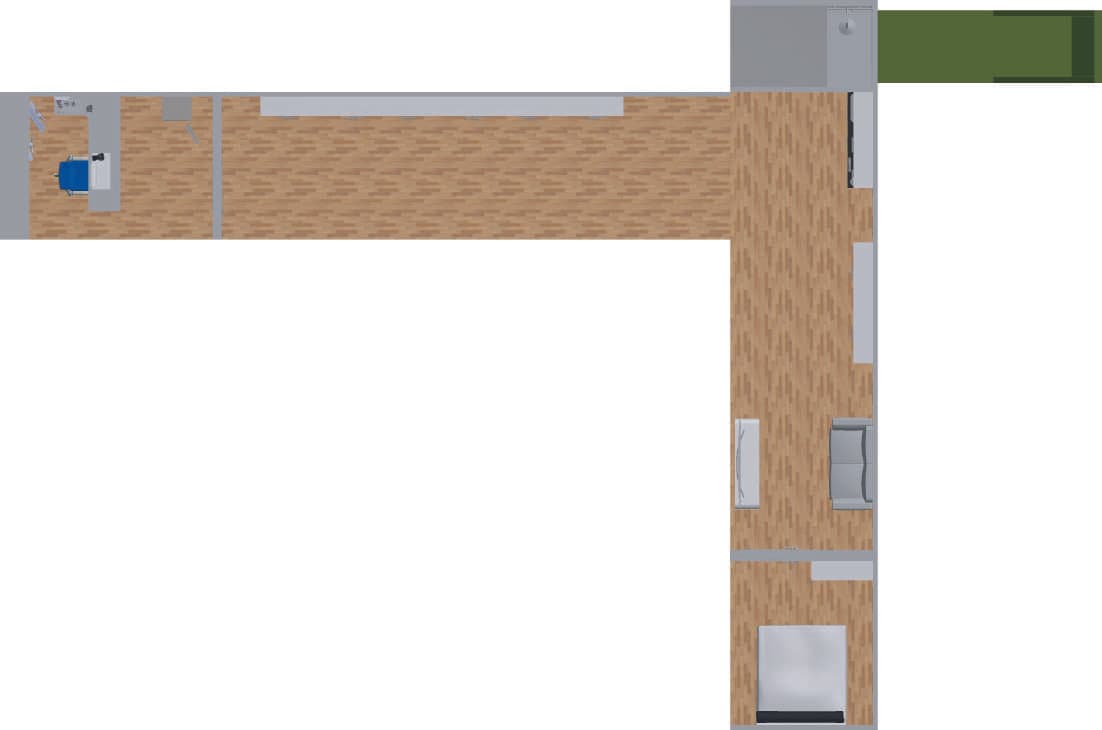
A T-shaped layout combining an ISO-40 main run with a perpendicular ISO-40 wing. The right-angle joint is reinforced with 80×80×2.5 mm carbon-steel tube engineered to distribute loads and pressures evenly across the geometry. The configuration suits sites that need functional separation — for example, a residential wing arranged perpendicular to a command-and-control wing.
Dimensions
T-configuration: 12.19 m main + 6.31 m perpendicular wing
Structure
Reinforced 80×80×2.5 mm carbon-steel tube at the right-angle joint, engineered to distribute loads
Exterior coating
6 mm sheet metal, three coats of bituminous waterproofing
Interior insulation
40 mm tri-layer panels for thermal and acoustic insulation
Interior layout
Adaptable rest/storage zones in main run; multipurpose space in perpendicular wing
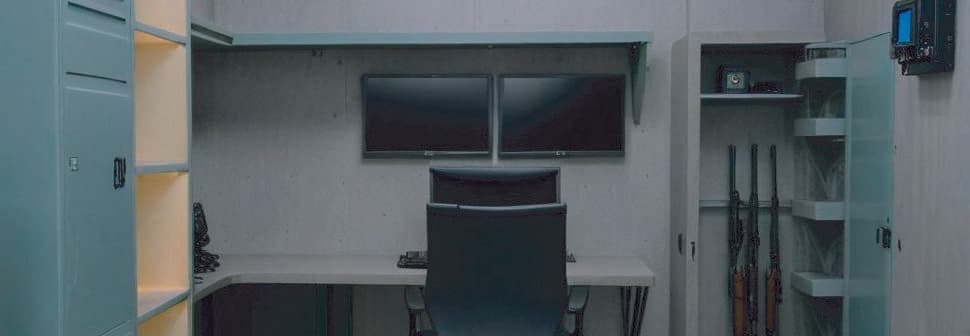
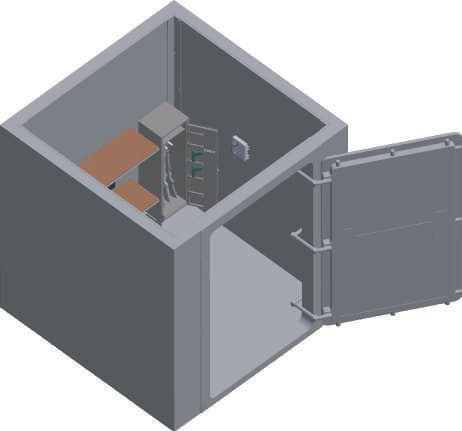
A hardened in-building safe room engineered for short-duration high-threat events — armed intrusion, organised attack, fire, or a chemical or smoke incident. The build uses grade-VI reinforced ballistic walls, a hermetic access door with reinforced interior hinges, and an integrated monitoring station that pairs CCTV, alerting, and triple-redundant communications. Self-contained life-support supports sealed operation.
Dimensions
2.5 × 2.5 × 2.5 m (interior)
Walls
Grade-VI armour: multilayer ballistic steel and high-density reinforced concrete
Access door
Hermetically sealed, reinforced interior hinges; smoke and chemical insulation
Interior finishes
Fire-retardant, anti-fungal, and antibacterial coatings
Every shelter is delivered with the integrated systems that allow prolonged sealed occupancy under nuclear, biological, or chemical threat conditions.
Watertight NBQ Access Control
Hermetically sealed access doors with multi-factor authentication options (biometric, magnetic card, PIN code), real-time central monitoring, and integration with site CCTV and alarm infrastructure. Engineered to block contaminant ingress while controlling authorised entry and exit.
Decontamination Shower Module
A pre-access chamber finished in AISI 316 sanitary stainless steel, fitted with a high-pressure multi-directional shower, decontamination-agent dosing, a 300-litre independent water reservoir, and a double-trap drain that captures contaminated water for downstream treatment. Hermetic doors control crossover to the clean side.
Multi-Stage NBQ Air Filtration
Pre-filter, biological filter, and chemical filter stages combining HEPA (99.97% at 0.3 µm) with impregnated activated carbon, sized for up to 500 m³/h. Positive interior overpressure is held throughout operation to prevent outside contaminated air from entering through micro-leaks.
Oxygen Renewal & CO₂ Scrubbing
Closed-environment air management with up to 300 m³/h of oxygen renewal capacity, 99.9% CO₂ removal efficiency, and real-time O₂/CO₂ sensing tied to automatic adjustment. Maintains a stable atmosphere for prolonged sealed occupancy.
Forced Ventilation
An electronically commutated fan paired with HEPA filtration supplies up to 500 m³/h of fresh, conditioned air. Operation stays quiet at 38 dB, and the control loop modulates airflow against measured CO₂ and O₂ levels. Fully compatible with the NBQ filtration train.
Triple-Redundant Communications
Three independent channels — an AES-256 encrypted landline, VHF/UHF radio with an HF emergency channel, and a satellite link (Starlink-class). A touchscreen control panel, silent-alarm option, integrated camera, and a configuration-sized battery backup with external-generator inputs round out the package.
Filtration Architecture
How Our NBQ Filtration Train Actually Works
Seven engineered stages, from the external blast valve to the redundant power supply — each calibrated to a recognised civil defence or NBC filtration standard.
01
External Air Intake & Blast Valve
Pressure-activated blast valves seated at every air inlet snap shut the moment an overpressure wave from detonation or accidental blast reaches the inlet. They close ahead of the damaging pressure front, protecting the filtration train downstream.
Sized to incident overpressure of the design threat
02
F7 Pre-Filter Stage
A coarse F7 pre-filter catches dust, soot, larger biological matter, and radioactive particulate well before the high-efficiency stage, extending HEPA service life and keeping downstream airflow stable.
EN 779 class F7 / ISO 16890 ePM1 ≥ 50%
03
HEPA H14 Particulate Filter
An H14-class HEPA stage removes 99.995% of particles at 0.1 µm, including fine radioactive fallout, bacterial and viral aerosols, fungal spores, and weaponised biological aerosols.
EN 1822 class H14
04
Impregnated Activated-Carbon Bed
An impregnated activated-carbon bed (ASZM-TEDA-grade equivalent) adsorbs the chemical warfare agents, toxic industrial vapours, smoke compounds, and radioactive iodine vapour that pass through the particulate stages upstream.
NATO-standard NBC carbon spec
05
Overpressure Valve
A calibrated overpressure valve holds the shelter interior at a positive pressure differential (typically 50–100 Pa). The outward push of clean air guarantees that contaminated outside air cannot migrate through micro-leaks at seals or door frames.
Continuous positive overpressure
06
EC-Fan Distribution & Monitoring
An electronically commutated fan delivers up to 500 m³/h of conditioned, filtered air, with airflow modulated in real time against O₂, CO₂, and pressure-differential readings. Sound output stays at 38 dB for comfortable extended occupancy.
Closed-loop O₂ / CO₂ / ΔP control
07
Redundant Power & Manual Backup
Battery autonomy is sized to each configuration, with dedicated inputs for an external generator and solar array. A hand-cranked manual backup remains available so the filtration train can continue operating even under complete electrical failure.
Configuration-sized battery + manual override
Accessories & Components
35+ Standalone Components & Protection Equipment
Beyond complete shelters, we supply every protection-grade component individually — blast valves and dampers, hermetic and ballistic doors, NBC filtration, gas detection, EMP shielding, ballistic glazing, mobile decontamination, PPE, and radiation equipment. Available for new builds, existing-facility retrofits, replacement cycles, and emergency stockpiling.
Blast Valves
Pressure-activated valves engineered to snap shut the instant an overpressure wave from detonation or accidental blast reaches an air inlet. Specified at shelter, panic-room, and hardened-facility air intakes.
Blast Dampers
Mechanical blast dampers installed inline with ventilation ductwork to isolate the interior atmosphere from external shockwave propagation during overpressure events.
Overpressure & Underpressure Valves
Calibrated valves that hold the shelter's positive internal pressure differential while permitting safe exhaust of stale air. Sized to room volume and air-handling capacity. BVNC-class units available.
Shut-off Gastight Valves
Inline gastight isolation valves for piping that penetrates the shelter envelope — sized for water, drainage, fuel, and signal lines. Maintain sealed-pressure integrity under threat conditions.
Shelter Water Shut-off Valves
Dedicated shut-off valves for shelter water supply and grey-water lines — manually and remotely actuated, sized for sealed-occupancy water management and contamination-event isolation.
Hermetic Shelter Doors
Multi-grade ballistic and hermetic shelter doors with reinforced interior hinges, multi-point sealing, and integrated authentication. Sized for new builds, retrofits, and component replacement.
Security & Bullet-resistant Doors
Ballistic-rated security doors graded to EN 1522 and EN 1063 classes — suitable for embassies, executive suites, command centres, and protected interior compartments.
Shelter Hatches & Escape Hatches
Reinforced overhead access hatches and emergency-escape hatches engineered for buried shelter envelopes. Supplied with full sealing assemblies and locking gear.
Protective Gates
Heavy-gauge protective gates designed for vehicle entry points, perimeter portals, and controlled-access corridors. Engineered to withstand forced-entry and vehicular impact attempts.
Protective Roller Shutters
Ballistic and blast-rated roller shutters for windows, service openings, and façade penetrations — deployable as fixed installations or rapid-activation barriers.
Protective Louvers
Hardened intake and exhaust louvers engineered to defeat fragmentation and small-arms penetration while preserving air-handling throughput.
Protected Windows
Multi-layer ballistic glazing systems with frame integration — graded to EN 1063 BR4-BR7 classes for embassy, executive, and institutional protected spaces.
Door Rubber Seals & Gaskets
Replacement hermetic seal sets and gasket kits for shelter doors and hatches — sized to specific door classes for periodic seal renewal during maintenance cycles.
NBC/CBRN Filtration Units & Cartridges
Standalone prefab filtration modules and replacement carbon and HEPA cartridges sized from compact panic-room duties up to multi-occupant institutional throughput.
CO₂ Chemical Absorption Filters
Replaceable CO₂ chemical absorption cartridges engineered for sealed-occupancy duty cycles — paired with scrubbers for extended interior atmospheric stability.
CO₂ Scrubbers
High-efficiency CO₂ removal units paired with real-time atmospheric monitoring to maintain a stable, breathable atmosphere inside a fully sealed shelter.
O₂ Supply & Air Control Systems
Pressurised oxygen reservoirs, generators, and metered distribution kits engineered for prolonged sealed occupancy when external ventilation cannot be used.
Gas Detection Systems
Continuous atmospheric monitoring for CO, CO₂, oxygen depletion, and chemical-agent presence — interlocked with filtration and ventilation control for automated response.
Shelter Ventilation Blowers
EC-fan blowers and explosion-proof ventilation units sized for shelter throughput requirements — supplied with redundant configurations for life-support reliability.
Hardened HVAC Protection
CBRN-rated air-handling units, ductwork shielding, and isolation dampers retrofittable into existing HVAC trains across institutional, government, and healthcare facilities.
NBC Piping Kits
Complete pre-fitted piping assemblies for inlet, exhaust, drainage, and filtration tie-ins — supplied with hermetic seals, brackets, and gaskets ready for installation.
Blast & Gastight Piping
Reinforced blast-resistant and gastight piping segments engineered for envelope penetration points — sized and pressure-rated to shelter-grade integrity requirements.
Wall Sleeves & Flanges
Hermetic wall sleeves and bolting flanges for clean envelope penetrations of signal, power, water, and ventilation lines — gasket-sealed for sustained pressure differential.
Backup Batteries & Power Management
Configuration-sized battery banks, charge controllers, and grid/solar/generator switching gear that sustain life-support and communications through extended electrical disruption.
Antennas & External Comms Mounts
Hardened external antenna mounts, cable penetrations, and signal feedthrough kits for HF/VHF/UHF, cellular, and satellite communications without compromising hermetic seal.
Blast Mitigation Fabric
Engineered ballistic and blast-fragmentation mitigation fabric systems for retrofit application to walls, ceilings, and openings in vulnerable existing structures.
Composite Armour Panels
Modular composite armour panels engineered for façade, interior partition, and vehicle protection — graded against ballistic, blast-fragmentation, and forced-entry threats.
Blast Reinforcement Structure
Engineered structural reinforcement — reinforced concrete beams, steel framing, and load-path strengthening — designed to bring existing walls, ceilings, and façades up to blast-resistance grade.
Prefab Concrete Shelters
Reinforced precast concrete shelter cells — engineered as an alternative to ISO-container construction for buried, semi-buried, and basement integration. Sized to occupancy and threat-class requirements.
EMP Shielding Systems
Faraday-cage assemblies, conductive gaskets, and shielded penetration kits engineered to MIL-STD-188-125-1 — protecting interior electronics from EMP and HEMP events.
Container & ISO-Box Protection
Hardening packages for ISO containers and modular site-office structures — ballistic, blast, and fragmentation retrofits for forward command and field deployments.
Indoor Security Cells & Safe Rooms
Prefabricated modular safe-room cells installed inside existing residences and offices — compact ballistic and hermetic envelopes for executive, residential, and panic-room duty.
Shelter Furniture & Bunk Systems
Space-optimised bunks, stowage, and integrated occupancy furniture sized to shelter cabin dimensions — fixed and fold-away configurations for varying occupant counts.
Mobile Decontamination Units
Trailer- and pallet-mounted decontamination chambers deployable to field sites, incident locations, and temporary command posts. Self-contained water, dosing, and waste-capture systems.
Flood Protection Barriers
Modular flood barriers and deployable seal kits for façade openings, doorways, and ground-floor penetrations — protecting buried shelters and ground-level safe rooms.
Radiation Detection & Dosimetry
Personal dosimeters, area radiation monitors, and integrated detection panels for fallout-shelter occupancy management and incident response teams.
Radiation Protection Equipment & PPE
Personal protective equipment kits, decontamination consumables, and radiation protection garments for occupant readiness and first-responder field deployment.
Need a specific component or a custom configuration?
Standalone components, replacement parts, retrofit kits, or full-spec configurations — request a confidential quotation and we will route the inquiry to the right engineering team.
Production runs under a documented quality management framework that mirrors ISO 9001 principles and the NATO AQAP-2110 standard for defence and security suppliers. Process controls, materials traceability, and inspection records accompany every module.
Materials & Construction
Primary structure uses 80×80×2.5 mm welded carbon-steel tube. The exterior shell is 6 mm sheet metal with a three-coat bituminous waterproofing system that resists humidity, corrosion, and groundwater intrusion. Interior insulation runs 40 mm in tri-layer panels (thermal and acoustic), stepped up to 80 mm at partitions.
Sanitary Decon Zone
Decontamination chambers and shower zones are lined with 0.5 mm AISI 316 sanitary stainless steel — the same grade specified in pharmaceutical clean rooms — for durability, chemical resistance, and hygiene across repeated decontamination cycles.
Energy & Redundancy
Each shelter ships with a battery backup sized to its configuration for life-support and communications, alongside dedicated inputs for external generators and solar arrays. Total energy capacity is calibrated to occupant count and the planned stay duration.
Designed and Built to Recognised International Standards
Our shelters and filtration systems are engineered to the same civil-defence, NBC, and structural standards adopted by leading shelter manufacturers in Europe, Israel, and NATO member states. Module-level test certificates are issued with every delivery.
Quality Management
All production runs under a documented quality framework that reflects both defence-supply and pharmaceutical-grade quality principles.
ISO 9001— Quality Management Systems
ISO 14001— Environmental Management Systems
ISO 45001— Occupational Health & Safety Management
NATO AQAP-2110— Quality Assurance for Defence Suppliers
CBRN Filtration & Air Management
Each filtration train is engineered around recognised European NBC filter classes alongside the blast-valve and overpressure protections that keep the train intact under attack conditions.
EN 1822 H13 / H14— HEPA Particulate Filter Classification
EN 779 / ISO 16890— Pre-Filter & General Ventilation Filter Class
ASZM-TEDA— NBC Activated-Carbon Specification
Blast valve protection— Explosion & overpressure valve protection systems
Modules are engineered around hardened-construction approaches and shelter-protection references that govern buried structures, blast doors, and overpressure-resistant envelopes.
Wall structures, hermetic doors, and ballistic glazing for panic rooms are specified against European norms covering forced entry, ballistic protection, and blast-fragment mitigation.
EN 1627 RC3 – RC6— Resistance to Manual Forced Entry
EN 1522 FB4 – FB7— Ballistic Resistance (Walls & Doors)
EN 1063 BR4 – BR7— Ballistic Resistance (Glazing)
NATO STANAG 2280— Blast & Fragment Protection Levels
EMP Shielding & Power Continuity
Faraday-shielded enclosures, surge-suppressed penetrations, and integrated emergency backup power deliver resilience under high-altitude EMP, intentional EMI, and grid-disruption scenarios.
MIL-STD-188-125-1— HEMP Hardening for Fixed Ground-Based Facilities
Backup power integration— Emergency backup power & energy continuity systems
Materials & Hygienic Surfaces
Decontamination chambers and food-contact zones are finished with the same sanitary-grade stainless steel and clean-room surfaces typically specified in pharmaceutical production environments.
Specific certifications applicable to a given configuration are confirmed at the engineering phase. Test certificates and supplier declarations are issued under NDA at project handover.
Services & Engagement Models
11 Service Lines — How We Engage With Clients
From a single site assessment to a multi-year retrofit programme, from custom-build new construction to emergency response packages and infrastructure hardening — eleven service lines under one MENA cooperation, designed to meet clients wherever they are in their preparedness journey.
Retrofit & Existing-Building Conversion
We convert existing rooms, basements, and wings into CBRN-rated protected spaces. Ballistic, hermetic, and filtration upgrades are engineered alongside structural surveys to preserve building integrity throughout the retrofit.
Custom-Build New Construction
Fully custom shelters and bunkers designed from a blank brief. Architectural, structural, and life-support engineering is tailored to client mandate, occupant count, threat scenario, and site constraints.
Design & Project Engineering Services
End-to-end engineering — architectural drawings, structural calculations, mechanical and electrical schematics, hermetic-envelope detailing, and full project documentation issued for permit submission and construction.
Site Assessment & Feasibility Consulting
Pre-engagement site visit, threat-scenario mapping, structural feasibility review, and shelter-class recommendation — issued as a written report under NDA before any commitment.
Infrastructure & Buildings Protection
Hardening programmes for critical infrastructure, government buildings, hospitals, energy assets, and data centres — combining envelope upgrades, CBRN filtration retrofits, and access-control hardening.
Emergency Response Solutions
Pre-positioned response packages combining mobile decontamination, PPE kits, atmospheric monitoring, and rapid-deployment shelter cells — engineered for ministries of health, civil defence, and first-responder organisations.
Security Structures & Specialty Buildings
Modular security posts, hardened strongrooms, bank-grade safes, anti-ram vehicle barriers, and arms & explosives storage facilities — designed and supplied as discrete units or integrated programmes.
Maintenance & Aftercare Contracts
Scheduled filter replacement, sealed-pressure testing, life-support recalibration, and operator refresher training under recurring service contracts. Spares stocked across the MENA region.
Operator Training & Shelter Activation SOP
Hands-on operator training, shelter activation drills, and written standard operating procedures. Aligned with Golden Hour Pharma's Civilian Response Training curriculum for end-to-end preparedness.
Institutional & Healthcare Protection Systems
Engineered protection packages for hospitals, emergency rooms, and government health facilities — combining CBRN-rated isolation suites, hardened HVAC, and decontamination pre-access zones.
Product Development & Custom Component Engineering
Bespoke component engineering for non-standard threat profiles, unusual site geometry, or sovereign specification requirements — delivered from concept through prototype to series production.
Commissioning Process
From Brief to Handover
Every project follows a four-stage process from confidential consultation through site delivery and operator training.
Step 01
Confidential Consultation & Site Assessment
An initial consultation runs under NDA. Together we map the threat scenario, occupant count, expected stay duration, and site constraints (residential, institutional, embassy, or critical infrastructure).
Step 02
Custom Design & Engineering
Architectural and structural engineering of the selected module configuration, life-support system sizing, and integration with site civil works. Detailed drawings and a fixed-scope quotation are issued for client approval.
Step 03
Production & Quality Validation
Modules are produced to specification under our partner's quality management framework. Materials traceability, weld inspection, sealing tests, and full life-support commissioning are completed before despatch.
Step 04
Site Delivery, Installation & Handover
Logistics, site placement, civil integration, sealing, system commissioning, and operator training are coordinated end-to-end. Project closeout remains confidential, with as-built documentation and ongoing maintenance support options.
Discretion is non-negotiable.
Every engagement is governed by a confidentiality agreement. We do not disclose client identities, site locations, or technical specifications to any third party. Visits, deliveries, and installations are coordinated to protect operational privacy throughout.
FAQ
Frequently Asked Questions
What is the difference between a panic room and a CBRN bunker?
A panic room is an in-building hardened space built for short-duration protection against intrusion, armed attack, fire, and chemical or smoke ingress — typically installed inside an existing residence or office. A CBRN bunker is a larger underground or buried structure engineered for prolonged occupancy during nuclear, biological, or chemical events, with full life-support including air filtration, oxygen renewal, decontamination, and autonomous power. Both formats reach our clients through the exclusive MENA marketing cooperation; panic rooms commonly serve as residential entry points alongside full bunkers configured for longer-stay shelter.
Can a CBRN shelter be installed under an existing home?
Yes. Our modular bunkers are dimensioned around standardised ISO container footprints and engineered to be lowered into a prepared excavation beneath or adjacent to an existing residence. Modules can be linked together, partitioned, and configured to fit the site. Every project includes a dedicated site assessment and structural engineering review.
What CBRN threats does the NBQ air filtration system protect against?
The NBQ filtration unit pairs HEPA filtration (capturing 99.97% of particles down to 0.3 microns) with activated-carbon filtration. It is engineered to remove fine radioactive particulate, biological agents (bacteria, viruses, spores), toxic industrial chemicals, and chemical warfare agents. Throughput reaches 500 m³/h, and the shelter is held at positive overpressure throughout operation to keep contaminated outside air from entering.
How long can occupants stay sealed inside a fully equipped bunker?
With the standard configuration — NBQ filtration, oxygen renewal, CO₂ scrubbing, and integrated water and food storage — occupants can remain sealed inside for extended periods. Battery autonomy is sized to the specific configuration, and connection to an external generator extends operation continuously. Consumables and energy reserves are dimensioned around occupant count and the threat scenario the client plans to design against.
Can existing rooms be retrofitted as panic rooms?
Yes. The panic room module is dimensioned to fit inside most residential or commercial spaces (interior 2.5 × 2.5 × 2.5 m). It ships with reinforced ballistic walls, a hermetic access door, a monitoring station, life-support equipment, and triple-redundant communications. Retrofit installations are coordinated alongside structural and architectural surveys so the host building's integrity is preserved. View the Panic Room module
What is the typical project timeline?
Project timelines depend on complexity, configuration, and site conditions. Panic room installations are usually completed in a matter of weeks, while a full underground bunker — with excavation and module placement — is generally planned across several months from consultation through commissioning. Detailed schedules are confirmed during the design and engineering phase.
Do you operate internationally?
Yes. Golden Hour Pharma serves clients across the MENA region, Africa, Latin America, and Asia. International logistics, customs clearance, and on-site installation are coordinated as part of the engagement.
Are projects covered by confidentiality agreements?
Yes. Every shelter engagement is governed by a confidentiality agreement. We do not disclose client identities, site locations, or technical specifications to any third party. Discretion is a core expectation of our institutional and high-net-worth clients, and we treat it as non-negotiable.
Speak with our shelter engineering team
Every project begins with a confidential consultation. Share the threat scenario, occupant count, and site context, and our engineering team will return a configuration recommendation within 24–48 business hours.