
Preparedness first.
Response second.
Resilience follows.
Structured training, response frameworks, and preparedness systems for ministries, institutions, and civilians — across radiological, chemical, biological, pandemic, and natural-disaster scenarios.
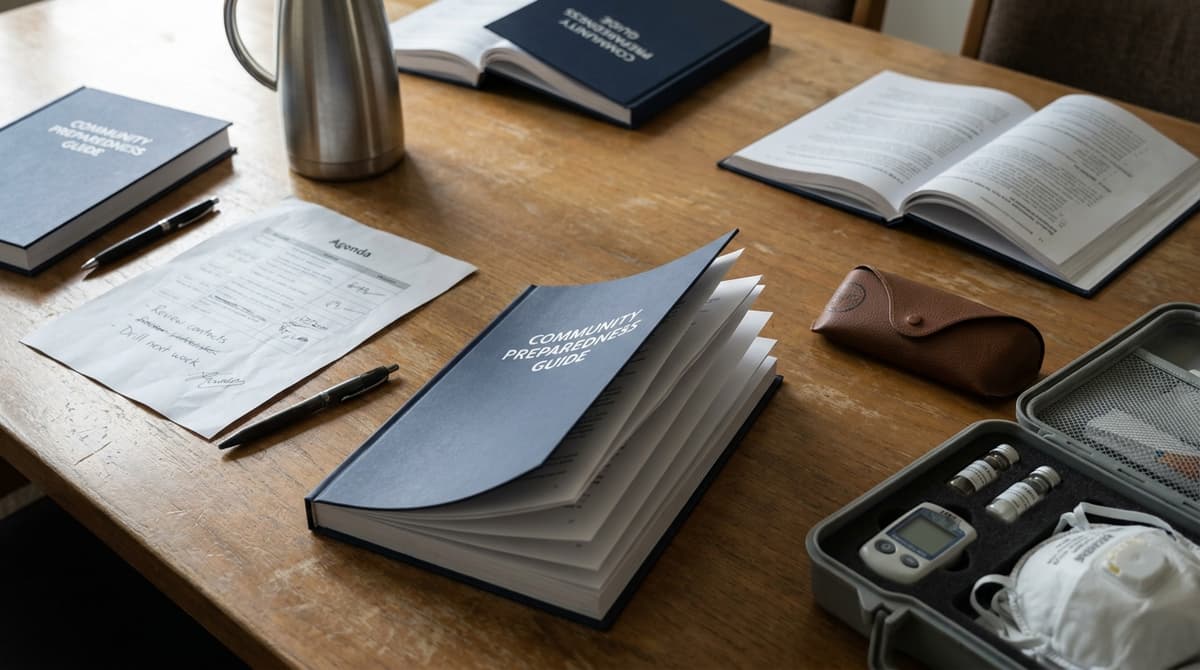
Training Across Regions, Hazards, and Institutions
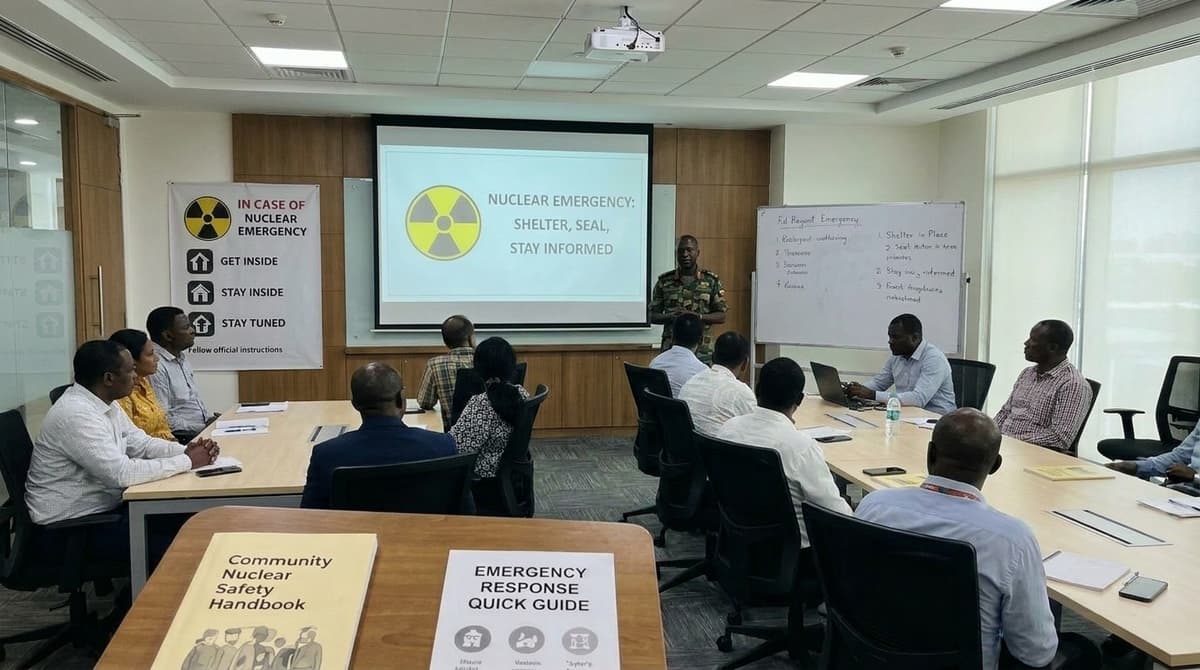
A snapshot of the programme types Golden Hour Pharma supports — from community disaster workshops to ministerial radiological briefings — delivered alongside structured manuals and response kits.
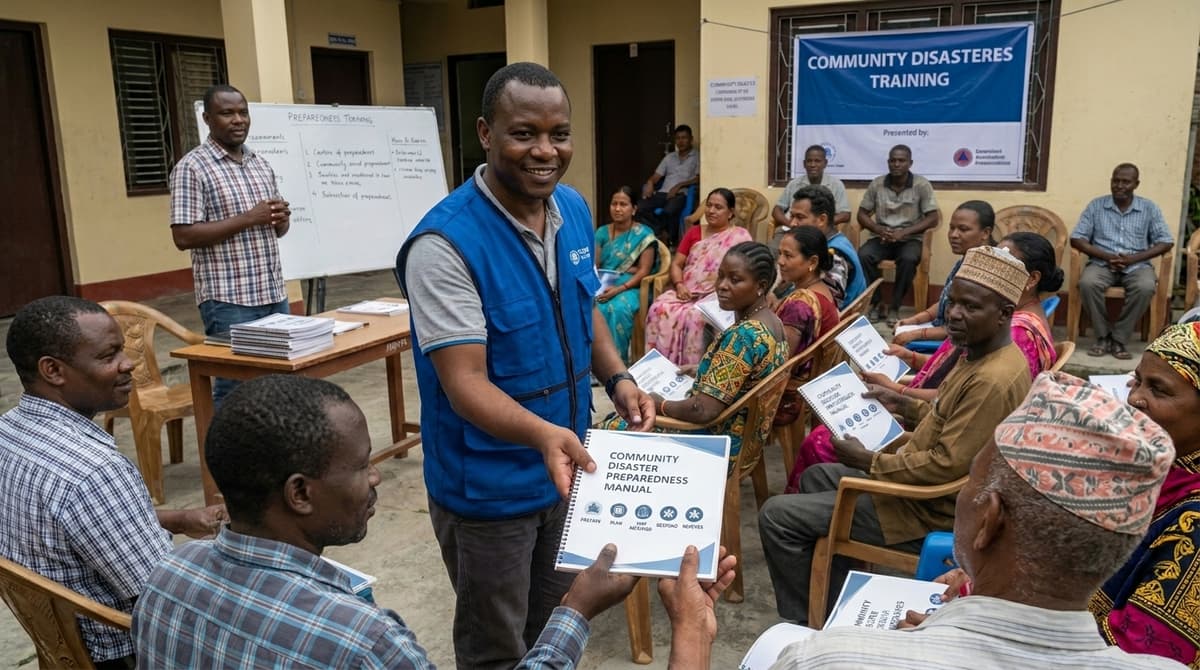
Community Disaster Preparedness Workshops
Civilian community groups receive structured manuals and briefings on multi-hazard household and neighbourhood preparedness.
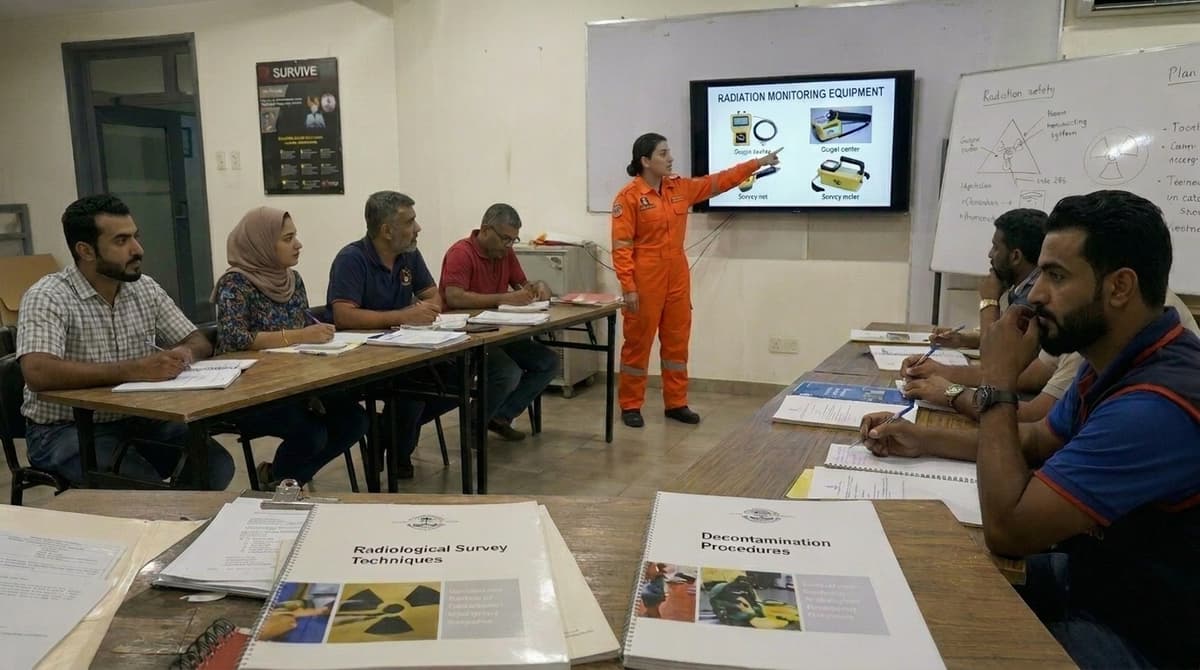
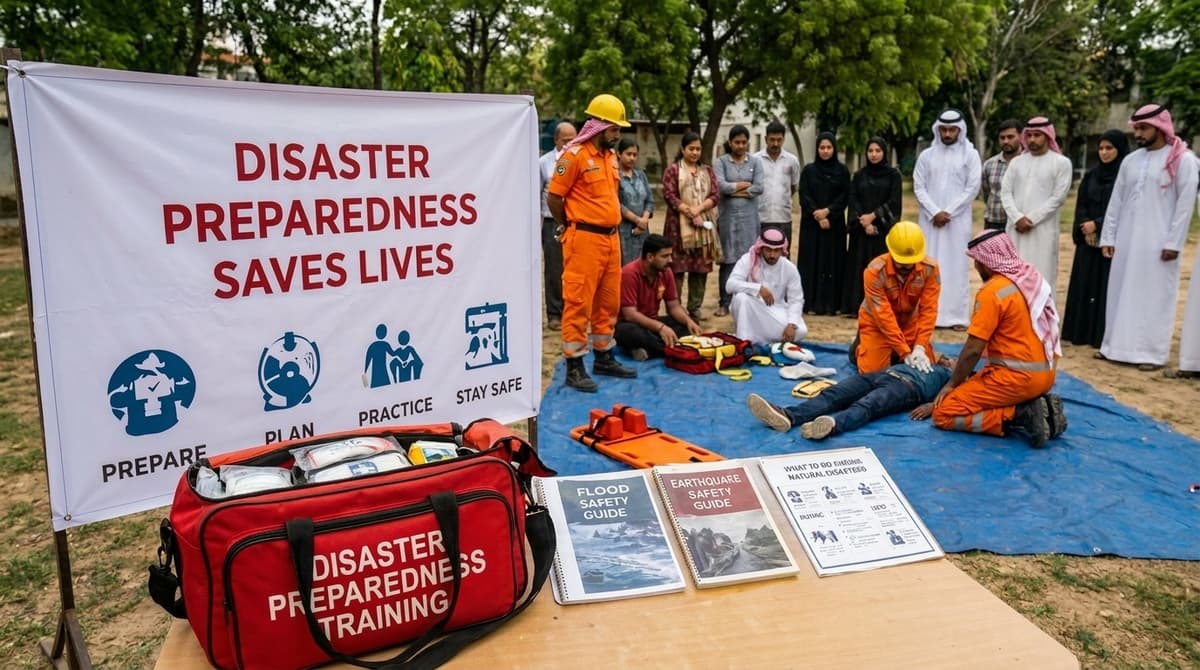
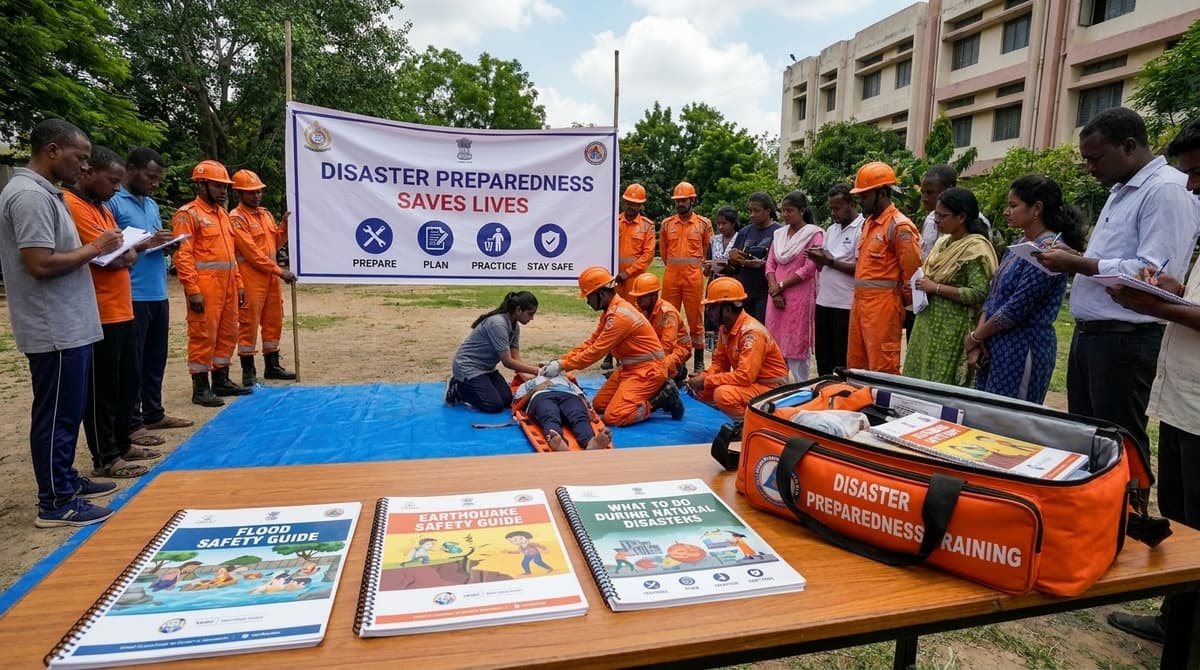
Community Disaster Preparedness Workshops
Civilian community groups receive structured manuals and briefings on multi-hazard household and neighbourhood preparedness.
The Nature of Risk Has Fundamentally Changed
Emergencies today are multi-layered, fast-moving, and often simultaneous — driven by climate change, urban density, and global interconnectivity. Institutions, industries, and civilians must be trained for a wider range of scenarios than ever before.
Radiological & Nuclear Events
Reactor incidents, contamination scenarios, dirty-bomb response, and cross-border radioactive fallout.
Toxic & Hazardous Gas Exposure
Chlorine, ammonia, and industrial gas leaks affecting communities, workplaces, and infrastructure zones.
Industrial & Chemical Disasters
Plant accidents, pipeline failures, and large-scale chemical release events with population-wide exposure risk.
Pandemics & Biological Threats
Outbreak response, infection control, and continuity of essential services during sustained biological events.
Floods & Natural Disasters
Climate-driven flooding, cyclones, earthquakes, and large-scale displacement requiring coordinated civilian response.
Infrastructure & Systemic Failures
Power, water, communication, and transport disruptions during compound emergencies — the multiplier of every other crisis.
The Three Pillars of Effective Preparedness
Preparedness is not built in the moment of crisis. It is built through structured systems, deployed long before they are needed. Our programmes rest on three interconnected pillars.
Structured Training & Awareness
Institutions, industries, and civilian populations are trained to identify emergency scenarios in real time and follow standardised response protocols — calm, disciplined decision-making instead of panic-driven reaction.
- Real-time scenario identification across multiple hazards
- Standardised, role-based response protocols
- Disciplined decision-making under pressure
Emergency Manuals & Response Frameworks
Standardised manuals provide step-by-step response structures, scenario-based guidance, and clear pre-arrival instructions — built in alignment with WHO and IAEA emergency preparedness guidance.
- Step-by-step response structures per hazard
- Coordinated evacuation, safety, and shelter procedures
- Pre-arrival action instructions for civilians and responders
Preparedness Kits & Response Systems
Training and frameworks are operational only when supported by ready-to-use kits — antidotes, protection, and structured checklists ensuring immediate action the moment an emergency begins.
- Emergency antidotes and pharmaceutical-grade supplies
- Decontamination and personal-safety equipment
- Activation protocols linking kits to institutional response
When Guidance Arrives Too Late, Panic Becomes the First Casualty
In modern crises, official alerts often arrive as fragmented social-media notifications at the last moment, with limited guidance and conflicting information. The result: public confusion, unverified instructions amplified online, and delayed response.
When civilians are instructed at the moment of crisis through social media, panic itself becomes the disaster. Structured pre-event training is the only defence.
Without structured preparedness, the gap between alert and action fills with misinformation and the kind of chaotic response that escalates emergencies instead of containing them.
National Response Systems Carry the Full Weight of Every Emergency
During major incidents, rescue and civil-defence operations are overburdened, route blockages delay access, communication networks fail under high system load, and real-time reach to affected populations is severely limited. Untrained populations compound every one of those failures.
No emergency system alone can replace the value of preparedness at the civilian and institutional level.
Trained Civilians Are a National Resilience Asset
Households
Families act with structure during the critical first hours, before official response arrives.
First Responders
Trained civilians stabilise neighbourhoods, schools, and workplaces in the operational gap.
On National Systems
Healthcare, rescue, and civil-defence services carry less load when civilians are part of the response layer.
Resilience Layer
A trained civilian population strengthens governmental, industrial, and social systems simultaneously.
Built for the Institutions That Carry the First-Response Load
Tailored to five institutional audiences — each with distinct mandates and response responsibilities.
Ministries
National emergency authorities, ministries of health, civil-defence agencies, and inter-agency coordination bodies.
Defence & Civil Protection
Military medical units, civil-defence forces, and national disaster-management bodies operating in high-stakes environments.
Healthcare Institutions
Hospital networks, public health authorities, and mass-casualty response teams responsible for clinical surge capacity.
Industrial Operators
Nuclear, chemical, and high-hazard industrial sites with on-site response responsibilities and surrounding-community obligations.
Civilian Networks
Community organisations, neighbourhood resilience groups, and civilian-protection networks acting as the front-line response layer.
Preparedness Pays Back — Economically and Nationally
Investment in preparedness shifts national strategy from reaction-based recovery to prevention-based resilience — reducing long-term systemic losses across healthcare, infrastructure, and economic continuity.
Lower Recovery Costs
Reduced disaster recovery and reconstruction expenditure when populations are pre-trained.
Healthcare Burden Relieved
Trained civilian first response reduces the surge load on hospitals and emergency systems.
Faster Operational Restoration
Industries, ministries, and institutions return to function sooner when staff act on structured protocols.
Stronger National Continuity
Reduced infrastructure damage escalation and faster return to economic and social stability.
Built on Confidential Engagements & Internationally-Recognised Frameworks
Sovereign & Institutional Engagements
Golden Hour Pharma has delivered preparedness training engagements to sovereign and institutional clients across multiple jurisdictions. Engagements are conducted under confidentiality agreements, which is why specific deployments and client identities are not disclosed publicly.
Aligned with WHO & IAEA Frameworks
Our training content, structured manuals, and response protocols are built in alignment with World Health Organization emergency preparedness guidance, IAEA radiological emergency frameworks, and CBRN response best practices recognised by international authorities.
Five Modules. One Operational Framework.
A structured, five-module framework for training civilian populations to act as a coordinated first-response layer. Issued in full to institutional partners and published progressively as a public series.
From Panic to Preparedness
Civilians as the First Line of National Resilience
Establishes the strategic case for civilian preparedness, household antidote readiness, and the cultural shift from passive recipient to active responder.
Read NowHousehold & Building Structural Safety
Sealing, Shelter, and Safe-Room Design
Covers structural readiness — sealing protocols, building safety zones, ventilation control, and household-level shelter design for radiological and chemical events.
Read NowCommunication, Command & Behavioural Protocols
Coordinated Action Under Pressure
Family command structures, communication discipline, behavioural frameworks, and the psychological readiness required for coordinated response.
Read NowEmergency Medical Kit & Antidotes
Pharmaceutical Readiness for Civilian Households
Categories of antidotes, supportive medicines, and the structured decision framework for household medical readiness during radiological, chemical, and biological events.
Read NowActivation, Evacuation & Civilian Response
Executing the Manual When Crisis Strikes
How the prior four modules activate together as one system — from initial alert through sealed shelter, controlled evacuation, and safe-zone arrival.
Read NowBeyond Pharmaceuticals. A Preparedness & Response Force.
Golden Hour Pharma works with governments, institutions, industries, and civilian networks to build integrated preparedness systems combining medicines, training, and operational frameworks.
Antidotes
Pharmaceutical-grade emergency antidotes for radiological, chemical, and biological scenarios.
Training Programmes
Structured programmes for institutions, ministries, and civilians.
Manuals
Standardised manuals and response frameworks for every operational layer.
Kits
Ready-to-deploy preparedness kits for households, offices, and institutions.
Crisis Protocols
Coordinated activation protocols built for real-world emergency conditions.
To save lives and safeguard nations — for a better and more resilient future.
Preparedness saves lives. Structure saves nations.
Golden Hour Pharma works with ministries, defence authorities, healthcare networks, industrial operators, and civilian groups to build the response capacity that makes nations resilient. Ready when it matters most.