
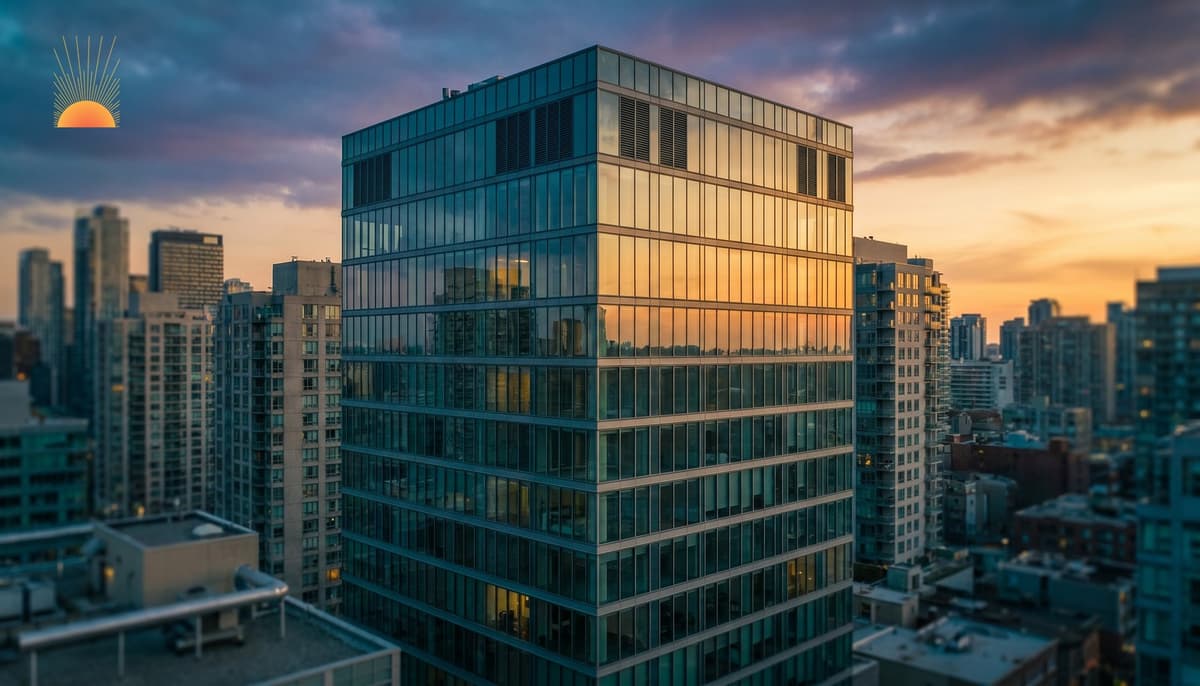
A sealed window.
Central air conditioning.
A controlled indoor environment.
It feels safe.
But modern cities are not designed for emergencies.
They are designed for efficiency.
And in a chemical, biological, or radiological (CBR) event, efficiency can quietly turn into exposure.
The Air You Trust Isn't Yours
In high-rise buildings, you don't control airflow.
HVAC systems do.
They move air across floors, across rooms, across people.
In normal conditions, that's comfort.
In a CBR scenario, that becomes silent transmission.
One contaminated entry point doesn't stay isolated.
It spreads—without sound, without warning, without time to react.
When Infrastructure Becomes the Multiplier
Cities are built on density.
Shared air. Shared movement. Shared systems.
That's what makes them powerful.
And that's exactly what makes them vulnerable.
Because in the first few minutes of an incident:
- No one knows what's happening
- No one knows what action to take
- And the system continues to operate as designed
Spreading, not stopping.
The Most Critical Gap
People assume safety is built into the environment.
It isn't.
When something goes wrong, buildings don't respond.
Systems don't adapt.
People are left to figure it out—in real time.
And in CBR situations, delay is exposure.
What Cities Are Missing
Urban safety today is incomplete.
Not because of lack of infrastructure—
but because of lack of immediate response capability at the point of risk.
What makes the difference is not the building.
It's what exists inside it when something happens:
- Protective readiness
- Medical countermeasures
- Decontamination capability
- Structured response protocols
- People trained to act instantly
Because in dense environments, the first response defines everything that follows.
Golden Hour Pharma
Golden Hour Pharma is built exactly for this reality.
- WHO-certified pharmaceutical manufacturer
- 750+ products across sterile and non-sterile categories (tablets, capsules, injectables, syrups, ointments, eye & ear drops)
- Presence in 30+ countries with strong regional partnerships
Specialized in:
- Emergency antidotes (radiation, toxic exposure, critical care)
- Oncology and autoimmune therapies
- Rapid-response pharmaceutical solutions
But beyond manufacturing, it operates as a complete preparedness partner, providing:
- Emergency response kits for civilian and institutional use
- Radiation preparedness solutions (including Prussian Blue, Potassium Iodide, and advanced combinations)
- Civilian Response Training (CRT)
- Structured emergency preparedness manuals (Modules-based system)
- Decontamination and response frameworks
- Advisory support for governments, corporations, and facilities
Because real preparedness is not a single product.
👉 It is a fully integrated system—before, during, and after an emergency
Conclusion
The biggest risk in modern cities is not the threat itself.
It's the belief that the environment will protect you.
Because when systems are built for comfort,
and not for crisis—
They don't fail gradually.
They fail when you need them the most.