
When we speak about nation building, every country actively encourages its youth and future generations to pursue excellence across critical fields. We guide them to become scientists, doctors, engineers, economists, policymakers, defense personnel, air force officers, police officers, artificial intelligence specialists, automation experts, aerospace engineers, physicists, astronomers, educators, entrepreneurs, and sports professionals.
These roles are rightly considered the backbone of national progress. Governments and societies consistently reinforce one message:
"You are the future of the nation."
Through these professions, nations grow stronger, more advanced, and globally competitive.
The Missing Link in Nation Building
However, there is a critical gap in this vision.
While nations invest heavily in professional education and skill development, they do not equally invest in preparing every citizen for national emergencies.
In times of crisis — pandemics, industrial disasters, radiological events, or large-scale disruptions — citizens are suddenly expected to remain calm, protect their families, and follow instructions.
But the reality is simple:
What Happens During Emergencies
When emergencies occur:
- Last-minute alerts create panic and confusion
- Essential supplies disappear rapidly
- Some individuals overstock excessively
- Others are left without basic essentials
- Critical items like medical kits and PPE become unavailable in the market
- Systems become overloaded and uneven
This leads to disorder, inequality, and breakdown of coordination at the exact moment stability is needed most.
The Real Crisis: Panic and Human Behavior
One of the most dangerous aspects of any emergency is not only the event itself, but human reaction under stress.
Without prior training:
- Anxiety escalates rapidly
- People act irrationally
- Mistakes increase under pressure
- Confusion spreads faster than instructions
- Crowd behavior becomes unpredictable
This is where systems begin to break down.
Why Guidelines Alone Are Not Enough
Issuing instructions during emergencies is not sufficient.
Guidelines tell people what to do — but they do not teach them how to act under pressure.
Proper training creates:
- Calm decision-making
- Reduced fear and confusion
- Structured response behavior
- Faster adaptation to crisis situations
- Greater discipline under uncertainty
Training transforms civilians from reactive individuals into stable, prepared responders.
A Necessary Policy Shift: Civilian Preparedness
Nations must expand the meaning of security and preparedness.
A structured national framework should include:
1. Mandatory Civilian Training
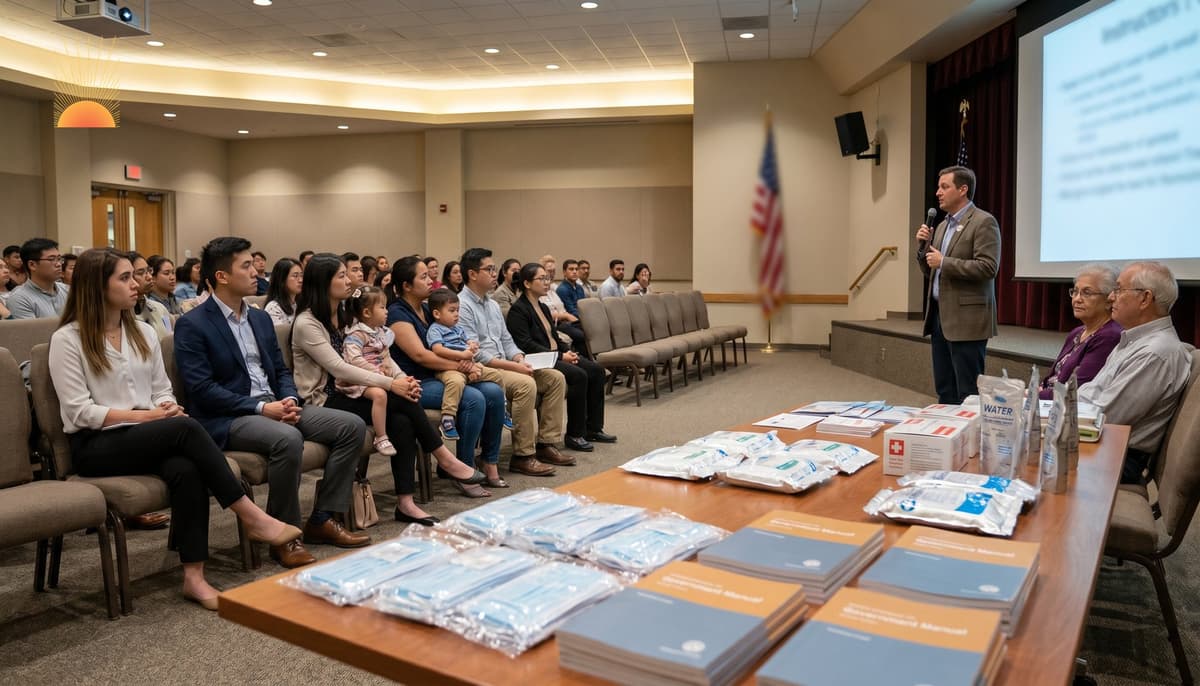
- Every citizen should receive basic emergency preparedness training
- A detailed national emergency manual should be issued to every household
- Training must cover:
- Emergency response behavior
- Evacuation and shelter protocols
- Basic survival skills
- Medical and safety awareness
2. Household-Level Preparedness as Standard Practice
Every household should maintain essential readiness kits, including:
- Personal PPE kits
- Basic medical kits (first aid and essential medicines)
- Other essential emergency supplies as per national guidelines
This should become a normal household responsibility, not a last-minute reaction.
3. Government Role: Enable, Educate, and Support
Governments should not carry the entire burden of crisis preparedness.
Instead:
- Set national standards for emergency kits
- Ensure market availability and regulation
- Conduct awareness and training programs
- Consider tax waivers or subsidies on emergency preparedness kits
This ensures preparedness is:
Strategic Impact of Prepared Citizens
A trained population leads to:
- Reduced panic during crises
- Lower burden on healthcare systems
- Minimal supply disruption
- Faster coordinated response
- Citizens acting as first-level responders at household level
Golden Hour Pharma – Strengthening National and Civilian Resilience
Golden Hour Pharma is a WHO-compliant pharmaceutical manufacturing plant, specialized in emergency antidotes, oncology, and autoimmune therapies, with a diversified portfolio of more than 750 products.
Our manufacturing capabilities span across:
- Tablets
- Capsules
- Injectables
- Syrups
- Ointments
- Eye drops
- Ear drops
We operate with strong regional partnerships across Saudi Arabia, the United Arab Emirates, and Bahrain, and we are currently catering to more than 30 countries globally, with continuous expansion underway.
Golden Hour Pharma is actively involved in:
- Training civilians and institutional bodies in emergency preparedness
- Supporting nations in building structured response capability
- Supplying essential medicines, antidotes, and standardized medical kits
- Strengthening national readiness through accessible pharmaceutical solutions
Our mission extends beyond manufacturing — we focus on enabling preparedness systems that support nations in real-world emergencies.
Conclusion
True nation building is not only about producing professionals who lead industries, governments, and innovation.
It is also about building citizens who can sustain the nation during crisis.
If we can prepare people for careers, leadership, and excellence — we must also prepare them for survival, resilience, and responsibility.
Because ultimately:
A nation is only as strong as its most prepared citizen.