
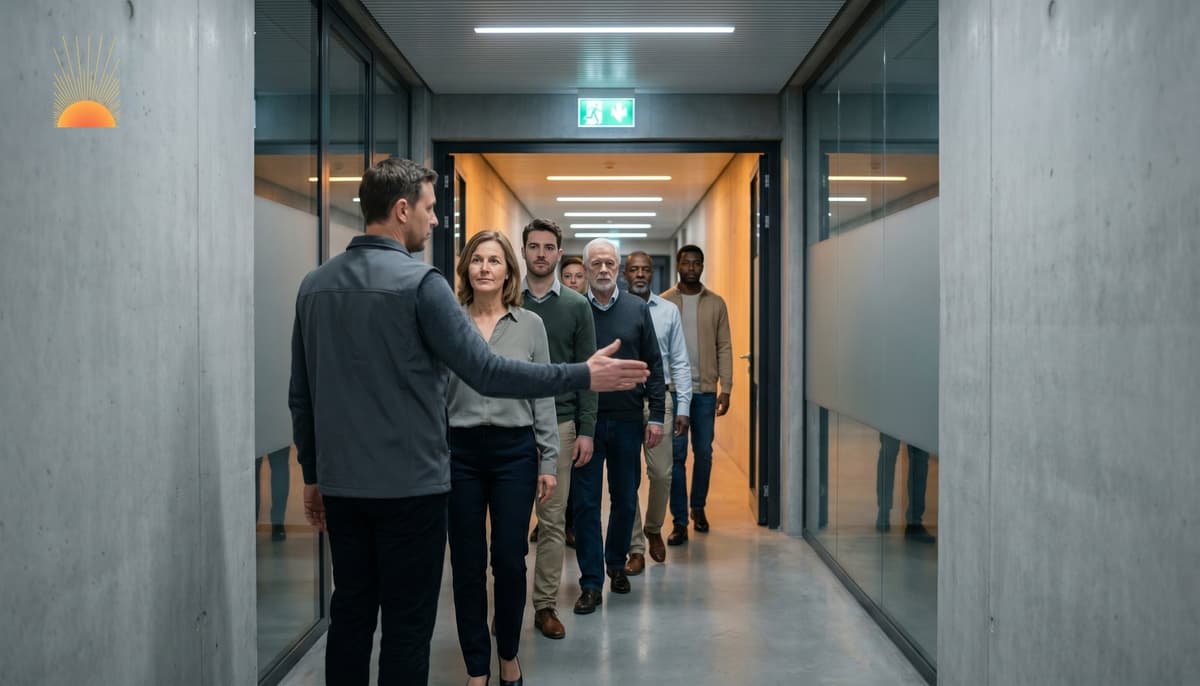
1. Panic in emergencies: a biological overload response
Panic is not a conscious reaction—it is an automatic survival response triggered when the human brain perceives immediate threat and loss of control.
During emergencies, the brain activates the fight–flight–freeze system, driven by the amygdala, while suppressing higher reasoning functions in the prefrontal cortex. This leads to:
- Rapid emotional reactions
- Reduced logical decision-making
- Instinct-driven behaviour
The result is often confusion, fear amplification, and loss of coordination.
2. Why panic happens
Panic emerges from four combined triggers:
A. Biological trigger
The body releases adrenaline and cortisol, increasing:
- Heart rate
- Breathing rate
- Muscle tension
This prepares the body for survival—but reduces clarity of thinking.
B. Cognitive overload
In emergencies, humans face:
- Time pressure
- Uncertainty
- Multiple stimuli
The brain shifts to shortcut survival thinking instead of structured reasoning.
C. Social contagion
Panic spreads rapidly in groups:
- People copy others' behaviour
- Fear spreads faster than facts
- Herd movement overrides logic
D. Information failure
Unclear communication from authorities or environments increases uncertainty, accelerating panic behaviour.
3. How panic transforms human behaviour
Under panic conditions:
- Rational thinking declines sharply
- Decision-making becomes impulsive
- Individuals follow crowd direction rather than correct direction
- Emotional intensity overrides instruction compliance
This is why even well-designed evacuation systems can fail if panic is uncontrolled.
4. When panic becomes catastrophic
In large-scale emergencies, panic can escalate into systemic failure:
A. Crowd disasters
- Stampedes due to uncontrolled movement
- Bottlenecks at exits
- Crushing and secondary fatalities
B. Operational breakdown
- Emergency responders face obstructed access
- Communication systems get overwhelmed
- Rescue coordination slows down
C. Behavioural escalation
Panic may evolve into:
- aggression
- competition for resources
- conflict between civilians
This transforms a controlled emergency into a multi-layered disaster scenario.
5. Why civilian training is critical
Civilian preparedness fundamentally changes this dynamic.
When people are trained and equipped with:
- Emergency response manuals
- Structured evacuation protocols
- Emergency response kits
- Antidote awareness systems (where applicable and authorized)
- Clear decision frameworks
They shift from panic response → procedural response.
This creates:
- Faster decision-making
- Reduced emotional overload
- Improved coordination
- Lower dependency on emergency services in early phases
6. Role of emergency response kits and antidotes in preparedness
Medical preparedness strengthens psychological stability.
- Emergency response kits provide immediate first-line response capability.
- Structured emergency pharmaceuticals improve survival readiness in early critical windows.
Important safety clarification:
Certain antidotes or specialized countermeasures must only be used under official government or medical authority direction during declared emergencies.
However, their availability in preparedness systems provides psychological assurance, because civilians know:
- Protection systems exist
- Response pathways are pre-planned
- They are not completely dependent on delayed external intervention
This reduces panic intensity and improves disciplined behaviour.
Prepared civilians become first stabilizers of their own environment before external responders arrive.
7. Where Golden Hour Pharma comes in
In modern crisis architecture, preparedness is not only about awareness—it is about integrated response systems.
This is where Golden Hour Pharma positions itself as a comprehensive emergency preparedness ecosystem partner.
About Golden Hour Pharma
Golden Hour Pharma is a WHO-aligned pharmaceutical manufacturing and preparedness organization specializing in:
1. Pharmaceutical manufacturing
- Sterile and non-sterile formulations
- Tablets, capsules, injectables, syrups
- Ointments, eye and ear drops
- Emergency and critical-care pharmaceutical categories
- Over 750+ product portfolio across multiple therapeutic segments
2. Emergency antidote specialization
- Radiation preparedness support systems (where applicable under regulation)
- Critical care emergency medicines
- Institutional-grade preparedness formulations
3. Civilian and institutional training programs
- Civilian Response Training (CRT)
- Institutional preparedness modules for ministries, hospitals, and civil defense bodies
- Emergency decision-making frameworks
- Crisis simulation awareness systems
4. Emergency response kits
- Emergency response kits for households and institutions
- Structured response kits designed for rapid stabilization
- Preparedness kits aligned with disaster scenarios
5. Preparedness manuals and systems
- Step-by-step emergency response manuals
- Crisis activation protocols
- Structured civilian guidance frameworks
8. Strategic purpose
The core philosophy is not just manufacturing—it is preparedness transformation:
- From reactive populations → to prepared civilians
- From panic-driven response → to structured response behavior
- From dependency → to early self-stabilization
This directly reduces system overload during crises and improves national-level response efficiency.
9. Final perspective
Panic is inevitable in human systems—but catastrophic outcomes are not.
The difference lies in preparedness:
- Untrained populations amplify disaster
- Trained populations stabilize it
When civilians are equipped with structured knowledge, medical readiness systems, and controlled response frameworks, they become the first layer of national resilience, not passive victims of crisis.
10. Closing principle
And in any large-scale emergency, the first stabilizer is not only the government or responders—it is a trained and equipped civilian population acting with clarity instead of panic.