
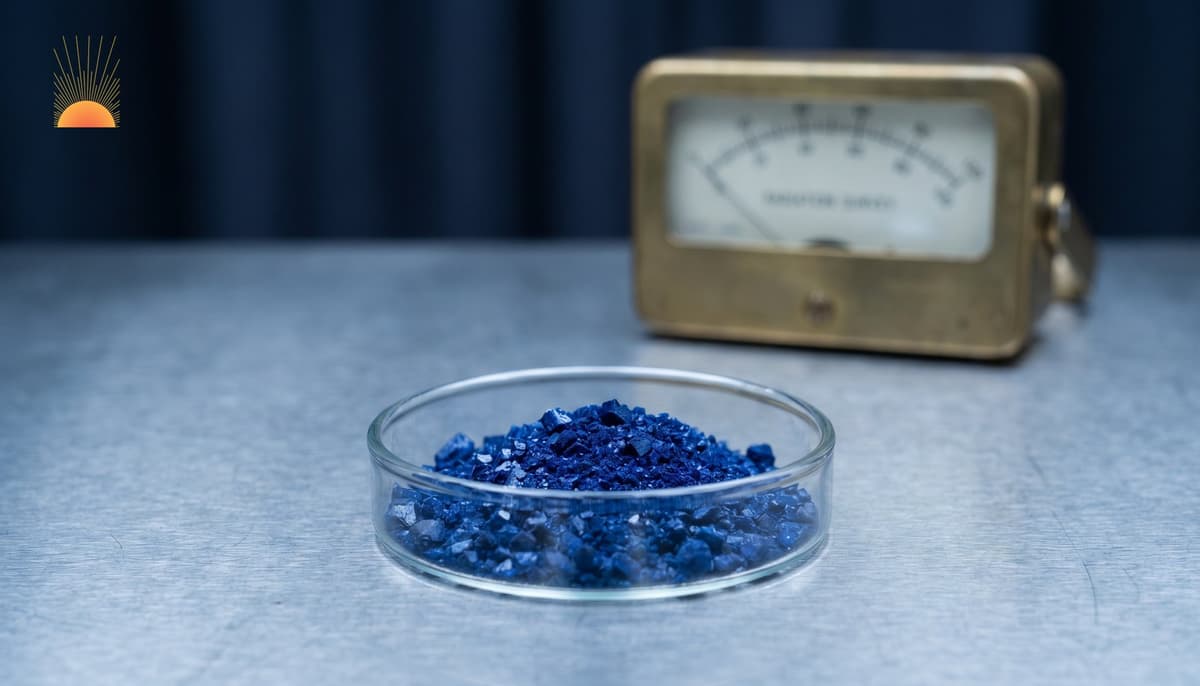
The effective cesium-137 treatment for internal contamination is not a hospital improvisation — it is a specific, regulator-approved antidote: insoluble Prussian blue (ferric hexacyanoferrate). For the health ministries, civil-protection agencies, and defence medical services planning for radiological incidents across MENA, Africa, and Latin America, the decisive question is not whether the antidote works. It is whether it is already in the national stockpile when a dispersal event, a lost source, or a contaminated patient arrives.
What Cesium-137 Is and Why It Endangers People
Cesium-137 (Cs-137) is a radioactive isotope produced by nuclear fission. With a physical half-life of about 30 years, it remains hazardous for generations, and because cesium chloride is a fine, water-soluble, intensely radioactive powder, it spreads easily and contaminates wide areas. It is the isotope most associated with three institutional threats: orphaned industrial and medical sources (such as decommissioned radiotherapy units), the radioactive material in a "dirty bomb" or radiological dispersal device (RDD), and fallout from reactor accidents.
Once inside the body — by inhalation, ingestion, or a contaminated wound — cesium behaves chemically like potassium. It distributes throughout soft tissue and is continually recycled between the bloodstream and the gut, irradiating the whole body from within for as long as it remains. That internal, ongoing exposure is what an antidote is designed to cut short.
External decontamination removes what is on the skin. It does nothing for cesium already absorbed into the body — and it is that internal burden that delivers the continuing radiation dose. Internal contamination needs a decorporation agent, not a shower.
Goiânia, 1987: The Case That Proved the Antidote
The reference event is the 1987 Goiânia accident in Brazil. Scrap collectors breached an abandoned teletherapy source containing roughly 50.9 TBq of cesium-137 chloride. According to the International Atomic Energy Agency, about 112,000 people were monitored, 249 were found to be contaminated, and four died. It remains one of the most serious radiological accidents on record — and the first time Prussian blue was used on a large scale.
The lesson health authorities took from Goiânia was not only clinical but logistical: the antidote shortened the elimination half-life and measurably reduced the radiation dose patients absorbed — but only because it could be administered. The medicine has to exist, in quantity, near the people who need it, before the event.
The Antidote: Insoluble Prussian Blue
The drug of choice for internal cesium contamination is insoluble Prussian blue — chemically ferric hexacyanoferrate(II). In 2003 it became the first medical countermeasure approved by the U.S. FDA specifically for internal contamination with radioactive cesium or thallium. The World Health Organization lists it as an essential medicine — an orphan drug that the WHO holds every country should be able to access for radiological and toxicological emergencies, yet one that few national stockpiles actually carry.
How Prussian Blue Works on Cesium
Prussian blue is not absorbed into the bloodstream. It works entirely inside the gastrointestinal tract as an ion-exchange crystal lattice. Cesium ions that the body keeps recycling back into the gut are trapped by the lattice and held there, so instead of being reabsorbed they are carried out of the body in the stool. The U.S. CDC describes this as interrupting the reabsorption cycle that would otherwise keep cesium circulating in the body for months.
By cutting the time cesium stays in the body from roughly 110 days to around 30, Prussian blue sharply reduces the total radiation dose delivered to the tissues. Treatment should begin as soon as internal contamination is suspected; the longer cesium recirculates, the more dose accumulates.
Dosing and Administration
Per U.S. HHS REMM and FDA labelling, insoluble Prussian blue is given orally as 500 mg capsules. The regimens below are indicative; final dosing always sits with the treating clinician, national protocol, and whole-body radiation monitoring.
| Population | Typical regimen | Notes |
|---|---|---|
| Adults & adolescents (>12 yrs) | 3 g orally, three times daily (9 g/day) | Continue ≥30 days; higher daily doses used for heavy contamination |
| Children (2–12 yrs) | 1 g orally, three times daily | Per specialist / poison-control guidance |
| Tolerability | Generally well tolerated | Most common effect is constipation; stool turns blue |
The safety profile is benign — the compound is biologically inert and not systemically absorbed, which is part of why it is suitable for rapid administration in mass-exposure settings where individual work-up is not feasible.
One Antidote, Two Threats: Cesium and Thallium
The same molecule that decorporates radioactive cesium is also the antidote for thallium, a heavy-metal poison used in both industrial exposures and deliberate poisonings. This dual indication is what makes Prussian blue a strategic stockpile item rather than a niche reagent: a single procurement line answers both a radiological-contamination and a chemical-poisoning threat. The clinical detail of the toxic metal case is covered in our guide to thallium poisoning treatment. For thyroid-specific protection against radioactive iodine — a different isotope with a different mechanism — national stockpiles pair Prussian blue with potassium iodide.
Why Cesium Is a Stockpile Decision, Not a Pharmacy One
A radiological dispersal event, a lost industrial source, or a deliberate contamination is unpredictable in time and place, and time-critical once it happens. The window to limit absorbed dose closes while cesium recirculates — far faster than international procurement, customs, and shipping can deliver an orphan antidote that no regional supplier holds in volume. National stockpile frameworks exist precisely so the medicine is on the shelf before the event, not ordered after it. The same logic underpins emergency-response kits and the broader emergency preparedness posture that ministries across MENA and Africa are now formalising.
For procurement teams, the requirements are consistent: pharmaceutical-grade material to a recognised pharmacopoeia, WHO-GMP manufacturing, documented stability for multi-year storage, and a supplier able to support institutional volumes and re-certification. Golden Hour Pharma positions its Prussian blue (ferric hexacyanoferrate) supply and full nuclear emergency antidote range against exactly those criteria.
The Science Is Settled — Readiness Is the Variable
Cesium-137 internal contamination has a clear, evidence-based, regulator-approved treatment, validated in the largest civilian radiological accident of its kind. What separates a contained incident from a public-health crisis is rarely the science. It is whether the antidote is physically present, in sufficient quantity, when the first contaminated patient is identified. For institutions, that makes Prussian blue a preparedness decision.