
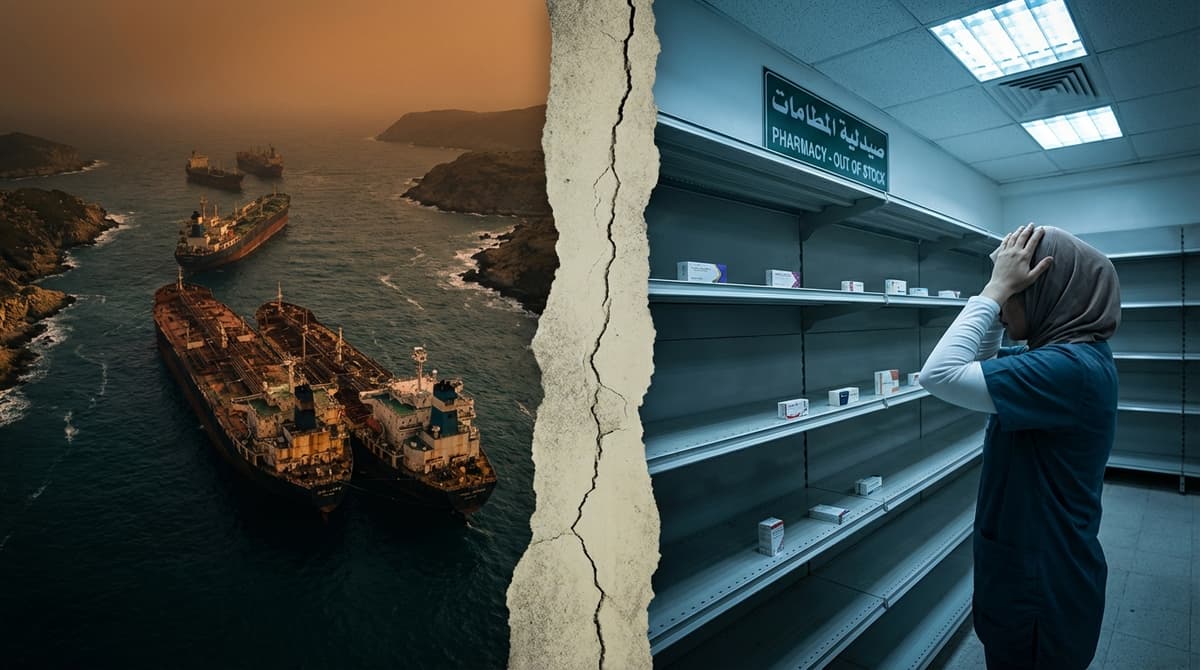
In times of uncertainty, when the world pauses, healthcare must continue with precision and purpose.
Because in medicine, time is not measured in minutes — it is measured in lives.
With unwavering focus and responsibility, we remain committed to delivering, supporting, and acting exactly when it matters most.
Golden Hour Pharma — delivering certainty in uncertain times.
When oil disruption becomes a healthcare crisis
Oil disruption is often viewed as an energy or geopolitical issue. But in reality, it is also a healthcare continuity issue. Modern pharmaceutical systems rely on oil-linked components at multiple stages — from petrochemical-dependent ingredients and packaging to plastics, logistics, transport, and storage systems. When that chain is disrupted, the impact can quickly reach hospitals, pharmacies, emergency rooms, and intensive care units.
Why the pharmaceutical industry is exposed
The pharmaceutical industry depends on oil both directly and indirectly. Active pharmaceutical ingredients can depend on petrochemicals. Capsules, coatings, and packaging are oil-derived. Medical devices and disposables such as syringes, gloves, and tubing rely heavily on plastics. Beyond manufacturing, logistics and supply movement are also tied to oil availability. This means the entire system is interconnected, and stress in one part of the chain can create shortages across the rest of it.
How the crisis unfolds
The preparedness strategy presentation outlines a clear crisis timeline. In the first 0–30 days, healthcare systems face ICU pressure. From 30–90 days, antibiotic shortages begin to emerge. After 90 days, disruption becomes system-wide. At the same time, demand rises for ICU drugs, emergency medicines, and antibiotics, placing even more pressure on already fragile supply systems.
What happens when medicine production is hit
When oil-linked supply chains are disrupted, medicine production can slow or stop. The result is reduced production, higher costs across raw materials and logistics, and growing shortages of life-saving medicines. Hospitals may face stockouts, treatments may be delayed, healthcare costs can rise, and import-dependent regions become especially vulnerable.
The medicines most at risk
Several medicine categories become especially vulnerable during supply disruptions.
Antibiotics
Critical for infection control during crisis periods.
Emergency & ICU Medicines
Essential in emergency response, surgery, and critical care.
Chronic & Essential Medicines
Needed for long-term disease management and acute complications.
Strategic Antidotes & Nutrition
Critical for radiological emergencies and ICU/neonatal nutrition.
Why MENA faces a higher level of risk
The MENA region faces a unique vulnerability profile. The presentation points to four major concerns: reliance on imported medicines, limited local API manufacturing, population growth increasing healthcare demand, and over-dependence on global supply chains. Together, these factors make the region more exposed to external shocks and medicine shortages during disruption events.
Why stockpiling is a strategic necessity
The material makes it clear that stockpiling is not panic buying — it is healthcare preparedness. Recommended stockpiling priorities for MENA include high-priority life-saving medicines such as insulin, epinephrine, and heparin; essential daily medicines such as metformin, amlodipine, and atorvastatin; infectious disease control products such as amoxicillin and azithromycin; and emergency preparedness medicines such as Prussian Blue and Potassium Iodide.
What a preparedness framework should look like
A strong stockpile strategy should be structured by category and urgency:
6 months
ICU & Emergency Medicines
3–6 months
Antibiotics
3 months
Chronic Medicines
This allows healthcare systems to maintain continuity of care while procurement and logistics are under pressure.
Procurement must happen before shortages begin
Preparedness is not only about storing medicines. It also requires better procurement strategy. The presentation recommends diversified sourcing to reduce dependency on single suppliers, early procurement to act ahead of shortages, and secure supply commitments to protect medicine availability during emergencies.
Supply chain continuity matters just as much as supply
Even when medicines are available, delivery systems must remain strong. That is why the framework emphasizes cold chain strengthening, dedicated logistics, and strategic warehousing. Medicines must be preserved correctly, transported safely, and positioned close enough for rapid deployment when healthcare systems need them most.
Preparedness requires public-private collaboration
Emergency pharmaceutical readiness cannot rely on one institution alone. The strategy highlights the need for seamless collaboration between governments and qualified private-sector partners. Key pillars include partnering with certified suppliers, ensuring rapid response capability, and maintaining regulatory compliance throughout the supply process.
The role Golden Hour Pharma is positioned to play
Golden Hour Pharma is presented as a partner built for preparedness. The presentation describes the company as operating a WHO-GMP compliant unit with capabilities across oral dosage, injectables, ointments, eye drops, and ear drops, supported by a network with major pharmaceutical companies. It also positions Golden Hour Pharma as a specialist in emergency medication supply, disaster management, timeline-sensitive delivery, quality-compliant medicines, and support for strategic stockpiles.
Acting early protects lives later
The message across the source material is clear: healthcare systems must recognize oil dependency as a real healthcare risk, build medicine reserves before crisis hits, strengthen resilience, and act proactively rather than reactively. In healthcare, preparedness is not optional. It is what protects continuity of care when the world becomes uncertain.