
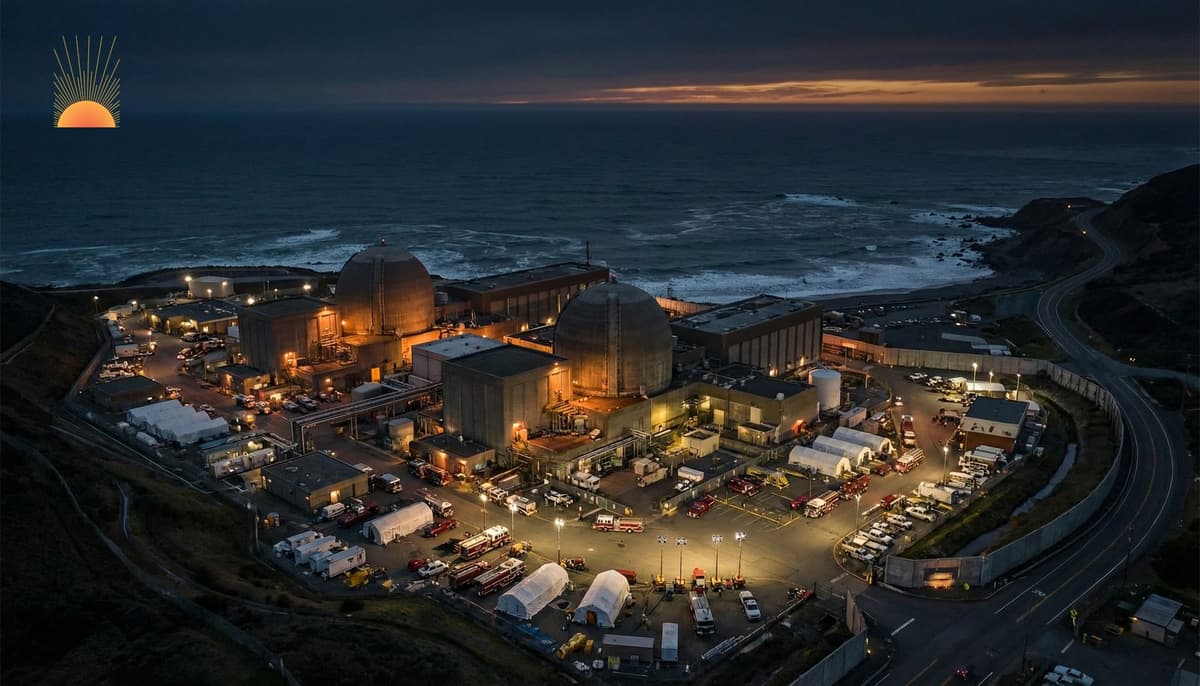
On 11 March 2011, a magnitude 9.0 earthquake off the Pacific coast of Japan triggered a tsunami that overwhelmed the Fukushima Daiichi Nuclear Power Plant, leading to three reactor core meltdowns and the most significant nuclear accident since Chernobyl. Unlike Chernobyl, however, Fukushima did not become a global catastrophe — because Japan's emergency systems, evacuation protocols, and medical countermeasures functioned as designed.
Fukushima is not a story about nuclear failure. It is a case study in how institutional preparedness — from automatic reactor shutdown systems to pre-positioned radiation antidotes — defines the difference between a regional emergency and a transnational disaster.
How the Fukushima Daiichi Disaster Unfolded
The disaster at Fukushima Daiichi was not caused by a nuclear detonation or bomb-type explosion. It was a cascade of engineering and infrastructure failures triggered by one of the most powerful earthquakes in recorded history, compounded by an extraordinary tsunami.
When the magnitude 9.0 earthquake struck at 14:46 local time on 11 March 2011, the SCRAM system — an automatic emergency shutdown mechanism — activated correctly. The nuclear chain reaction in all three operating reactors stopped as designed. Under normal conditions, the emergency would have ended there.
What followed was a failure of infrastructure, not reactor physics. The 14–15 metre tsunami that struck the Fukushima coastline approximately 41 minutes later destroyed the backup diesel generators that were intended to maintain cooling systems following the earthquake-induced grid blackout. A complete station blackout occurred. Without power, the cooling pumps stopped. And without cooling, decay heat — the residual thermal energy that continues inside a reactor core even after fission has ceased — began to build uncontrollably.
As decay heat melted the fuel rods in Units 1, 2, and 3, steam reacted with the zirconium fuel cladding to produce hydrogen gas. The accumulation of hydrogen led to explosions in the reactor buildings — structural, not nuclear explosions — that damaged containment structures and accelerated the release of radioactive material. The primary isotopes released were iodine-131, caesium-134, and caesium-137, according to the IAEA's official post-accident assessment.
The sequence — earthquake, tsunami, station blackout, loss of cooling, core meltdown, hydrogen explosion, radiological release — unfolded over 72 hours, giving emergency responders time to activate protocols that had been developed and rehearsed in advance.
How Japan Prevented a Global Catastrophe
Fukushima's outcome was not accidental. The disaster was contained at a regional level because multiple systems functioned in sequence: reactor safety systems, earthquake early warning infrastructure, national tsunami alert networks, pre-defined evacuation zones, and a deployable emergency healthcare framework.
The automatic SCRAM system activated within seconds of the earthquake. Japan's national earthquake early warning system issued alerts before the shaking reached maximum intensity, enabling a rapid transition to emergency protocols at the nuclear facility and in surrounding communities. The Meteorological Agency issued tsunami warnings that triggered coastal evacuation protocols across the affected prefectures within three minutes of the quake.
Japan's pre-established nuclear emergency response framework included predefined evacuation zones (initially 3 km, rapidly expanded to 20 km and then 30 km), pre-positioned potassium iodide stockpiles in municipalities within 20 km of nuclear facilities, coordinated dispatch of disaster hospitals and radiation monitoring teams, and national-level coordination with the International Atomic Energy Agency. According to the World Health Organization's Fukushima health risk assessment, no acute radiation deaths occurred among the public — a direct function of the speed and scope of the evacuation response.
Approximately 150,000 residents were evacuated from the surrounding region in the days following the tsunami. Long-term health surveillance programs — including the Fukushima Health Management Survey — were initiated to monitor thyroid function, psychological health, and general wellbeing of affected populations. The survey continues to collect data today, providing one of the most comprehensive post-nuclear-accident health datasets ever assembled.
Medical Countermeasures: Potassium Iodide and Prussian Blue
Two pharmaceutical countermeasures are central to radiation emergency response: potassium iodide (KI) for thyroid protection against radioactive iodine, and Prussian blue (ferric hexacyanoferrate) for internal caesium decontamination. Both were relevant to the Fukushima event, and both are cornerstones of any institutional nuclear emergency stockpile.
Potassium Iodide (KI) — Thyroid Protection
Potassium iodide works by saturating the thyroid gland with stable (non-radioactive) iodine before radioactive iodine-131 can be absorbed. When administered promptly — ideally within 1–2 hours of radioactive iodine exposure — KI effectively blocks uptake and significantly reduces the risk of thyroid cancer, particularly in children and pregnant women whose thyroids are most vulnerable.
At Fukushima, KI tablets were distributed in evacuation zones. The WHO health risk assessment concluded that the combined effect of prompt evacuation and KI distribution kept thyroid dose exposure well below levels associated with cancer induction in the general population.
The WHO-recommended dosing protocol for potassium iodide, referenced in national emergency preparedness frameworks across 30+ countries, is as follows:
| Age Group | Recommended KI Dose | Available Strengths |
|---|---|---|
| Adults (18–40 years) | 130 mg | 1 × 130 mg tablet |
| Adults over 40 years* | 130 mg (risk-benefit dependent) | 1 × 130 mg tablet |
| Pregnant / breastfeeding | 130 mg | 1 × 130 mg tablet |
| Adolescents (12–17 years) | 65 mg | 1 × 65 mg tablet |
| Children (3–11 years) | 65 mg | 1 × 65 mg tablet |
| Infants (1 month – 3 years) | 32 mg | ½ × 65 mg tablet |
| Neonates (< 1 month) | 16 mg | ¼ × 65 mg tablet |
*Adults over 40 have a lower risk of radiation-induced thyroid cancer; KI is recommended when thyroid dose is expected to be high. Always defer to national authority protocols. Source: WHO Guidelines for Iodine Prophylaxis Following Nuclear Accidents, CDC Radiation Emergencies — Potassium Iodide.
Golden Hour Pharma supplies pharmaceutical-grade KI in all three clinically relevant strengths — 65 mg, 130 mg, and 32 mg — to institutional buyers, procurement agencies, and national emergency stockpile programs across the MENA region and beyond.
Prussian Blue — Internal Caesium Decontamination
Prussian blue (ferric hexacyanoferrate) is the WHO-approved treatment for internal contamination with radioactive caesium (caesium-134, caesium-137) and thallium-201. It works by binding these radionuclides in the gastrointestinal tract, preventing reabsorption and accelerating their elimination from the body.
Caesium-137 — one of the primary isotopes released at Fukushima — has a 30-year physical half-life and a biological half-life of approximately 70–100 days in adults. Without intervention, ingested or inhaled caesium-137 distributes throughout body tissues and continues to irradiate organs internally. Prussian blue treatment can reduce the biological half-life to approximately 30 days, significantly decreasing the total radiation dose received.
- Approved indication: internal contamination with caesium-134, caesium-137, or thallium-201
- Mechanism: ion exchange in GI tract — binds radionuclides and prevents enterohepatic recirculation
- Effect: reduces biological half-life of Cs-137 from ~100 days to ~30 days
- Route: oral (capsule or tablet)
- Known side effects: constipation, mild gastrointestinal discomfort, temporary blue-grey stool discolouration
- Shelf life: 5+ years under standard pharmaceutical storage conditions
- Regulatory status: FDA-approved, included on the WHO Model List of Essential Medicines
- Stockpile requirement: national guidance typically recommends 3g/day × 30 days per exposed person
- Supply risk: limited manufacturers globally — pre-positioning is essential
- Available from Golden Hour Pharma in pharmaceutical-grade formulations for institutional supply
Frontline Response: Who Was Deployed
The Fukushima response mobilised thousands of specialised personnel across multiple agencies, rotating through high-radiation environments in carefully managed shifts to limit cumulative dose. This approach — learned from Chernobyl's catastrophic mismanagement of worker exposure — was a direct outcome of post-Chernobyl reforms in international nuclear emergency protocols.
The frontline comprised TEPCO engineers and plant operators managing reactor stabilisation; Japan Self-Defense Forces supporting decontamination, water pumping operations, and aerial reconnaissance; firefighting teams from the Tokyo Metropolitan Fire Department deploying water cannon on Units 3 and 4; radiation safety specialists managing dosimetry and contamination monitoring; and international nuclear experts from the IAEA, US Nuclear Regulatory Commission, and bilateral technical assistance programs.
Rotating Shift Protocol: Exposure limits were set at 250 mSv per worker (raised from the standard 100 mSv during the emergency phase, subsequently reviewed by authorities). Approximately 25,000 TEPCO workers and contract staff were involved in stabilisation operations in the first year. Long-term health monitoring of all workers remains ongoing under the TEPCO Workers' Health Study. Source: IAEA Fukushima Daiichi Accident Report.
Radiation screening stations were established at evacuation zone perimeters, conducting full-body contamination checks for all persons leaving the exclusion zone. Thyroid screening programs for children in Fukushima Prefecture were launched within months — detecting thyroid doses and establishing baseline data for long-term cancer surveillance.
Health Outcomes and Radiation Impact
The radiological impact of Fukushima was geographically confined compared to Chernobyl. The majority of significant contamination was concentrated within the Fukushima Prefecture. Low-level radioactive material was detected across Japan and in trace quantities internationally — but well below levels associated with health risk, as confirmed by the United Nations Scientific Committee on the Effects of Atomic Radiation (UNSCEAR) 2020 report.
| Health Outcome Category | Finding | Source |
|---|---|---|
| Acute radiation deaths (public) | Zero confirmed | WHO, UNSCEAR 2020 |
| Acute radiation syndrome (workers) | 2 workers with radiation burns; no fatal ARS cases | TEPCO, IAEA |
| Indirect deaths (evacuation-related) | Approximately 2,202 "disaster-related deaths" — stress, disruption of medical care, evacuation hardship | Fukushima Prefecture, Japanese Government |
| Thyroid cancer | Elevated detection rates in children (predominantly through enhanced screening); causality remains under scientific evaluation | Fukushima Health Management Survey, The Lancet Public Health |
| Long-term cancer risk (public) | Calculated dose increases project marginal elevation in lifetime cancer risk for most; highest in the most exposed children | WHO Health Risk Assessment 2013, UNSCEAR 2020 |
The most consequential lesson from the health data is not radiological but institutional: the indirect deaths — caused by evacuation stress, disruption of chronic disease management, and psychological trauma — exceeded any direct radiation harm to the public. This underscores that nuclear emergency preparedness must address medical continuity, psychological support infrastructure, and supply chain resilience alongside radiation countermeasures.
Containment, Recovery, and Ongoing Decommissioning
Stabilising Fukushima Daiichi required years of sustained engineering effort. Continuous cooling systems were constructed to prevent further fuel damage. Hydrogen explosion prevention measures were retrofitted across the site. An underground ice-wall barrier — a frozen soil perimeter — was installed to block groundwater contamination of the Pacific Ocean.
The Advanced Liquid Processing System (ALPS) was deployed to treat accumulated radioactive water, removing most radionuclides except tritium. The treated water discharge decision — made in 2023 after extensive review by the IAEA — remains one of the most scrutinised post-accident management decisions in nuclear history.
Full decommissioning of the three damaged units is expected to take until 2051. The process involves fuel debris retrieval from reactor pressure vessels — a technical challenge without precedent in the industry.
Golden Hour Pharma: Emergency Preparedness Supply Partner
Golden Hour Pharma is a WHO-aligned pharmaceutical manufacturer and institutional supply partner specialising in emergency medicines — including the radiation antidotes directly relevant to nuclear incidents of the Fukushima type.
Our product portfolio includes pharmaceutical-grade Potassium Iodide (KI) in 65 mg and 130 mg tablet strengths, Prussian Blue formulations for internal caesium and thallium decontamination, and Potassium Iodate (KIO3) as an alternative thyroid protection agent. All three products are manufactured to USP/BP/IP standards and are available for institutional stockpiling, national procurement programs, and emergency pre-positioning.
Golden Hour Pharma is the first manufacturer to introduce a Magnesium + Prussian Blue combination formulation for frontline preparedness. The rationale is clinical: prolonged radiation emergencies place exceptional physiological stress on frontline responders. Magnesium supports neuromuscular stability under sustained stress, reduces fatigue during extended crisis operations, and supports cardiac and electrolyte balance — directly addressing the physiological vulnerabilities documented in Fukushima and Chernobyl frontline responders. The combination is designed for institutional stockpiling and deployment with emergency response teams. Source: NIH Magnesium Fact Sheet, WHO Nutritional Guidance.
Our manufacturing facilities are capable of producing sterile and non-sterile pharmaceutical forms — tablets, capsules, injectables, syrups, ointments, and ophthalmic preparations — across a portfolio of 750+ products. We supply institutional clients in Bahrain, the UAE, Saudi Arabia, and 30+ countries globally. Visit our nuclear emergency antidotes page for the full product range and procurement specifications.
- Supply shortages due to limited manufacturer base
- Price escalation during emergency procurement windows
- Delivery delays caused by logistics disruption
- Inconsistent quality documentation for regulatory compliance
- Pre-positioned stock and surge manufacturing capacity
- Fixed institutional pricing with contractual supply commitment
- Rapid delivery to MENA region and 30+ country network
- Full batch documentation, certificates of analysis, and GMP compliance records
The Global Lesson: Preparedness Determines Survival Scale
Fukushima Daiichi remains one of the most extensively studied nuclear accidents in history — documented and assessed by the WHO, IAEA, UNSCEAR, the US Nuclear Regulatory Commission, and TEPCO itself. The data is unambiguous: preparedness was the deciding variable between a regional emergency and a global catastrophe.
The automatic shutdown systems worked. The evacuation protocols worked. The radiation antidote distribution worked. The health monitoring infrastructure worked. And because these systems existed and had been stress-tested before the disaster, Japan was able to respond to an unprecedented compound emergency with speed and coordination that contained the fallout — literally and institutionally.
The Current Global Context: WHO, the IAEA, and the United Nations continue to issue guidance urging nations to strengthen nuclear and radiological emergency preparedness. In the context of escalating geopolitical tensions, conflicts in regions with nuclear infrastructure, and aging reactor fleets globally, the concern is no longer theoretical. A future radiological incident — whether accidental or conflict-triggered — would not respect national borders. Contamination through air currents, water systems, and food chains can affect populations far beyond the incident origin. Only the depth of preparedness at the point of impact will determine the scale of humanitarian consequence.
The question is no longer whether another major nuclear or radiological emergency will occur. The question is whether institutions, governments, and procurement authorities have pre-positioned the antidotes, stockpiled the countermeasures, and established the distribution systems to respond when the window for action is measured in hours, not weeks.
Fukushima has already written its lesson. Visit Golden Hour Pharma's emergency preparedness supply hub to assess your institution's radiation antidote readiness against current WHO and IAEA guidance.
- Potassium Iodide (KI) — Pharmaceutical Grade Institutional Supply
- Prussian Blue (Ferric Hexacyanoferrate) — Caesium Decontamination Supply
- Potassium Iodate (KIO3) — Thyroid Protection for Institutional Stockpiles
- Full Nuclear Emergency Antidote Range
- Emergency Medicine Procurement — Institutional Supply Partner