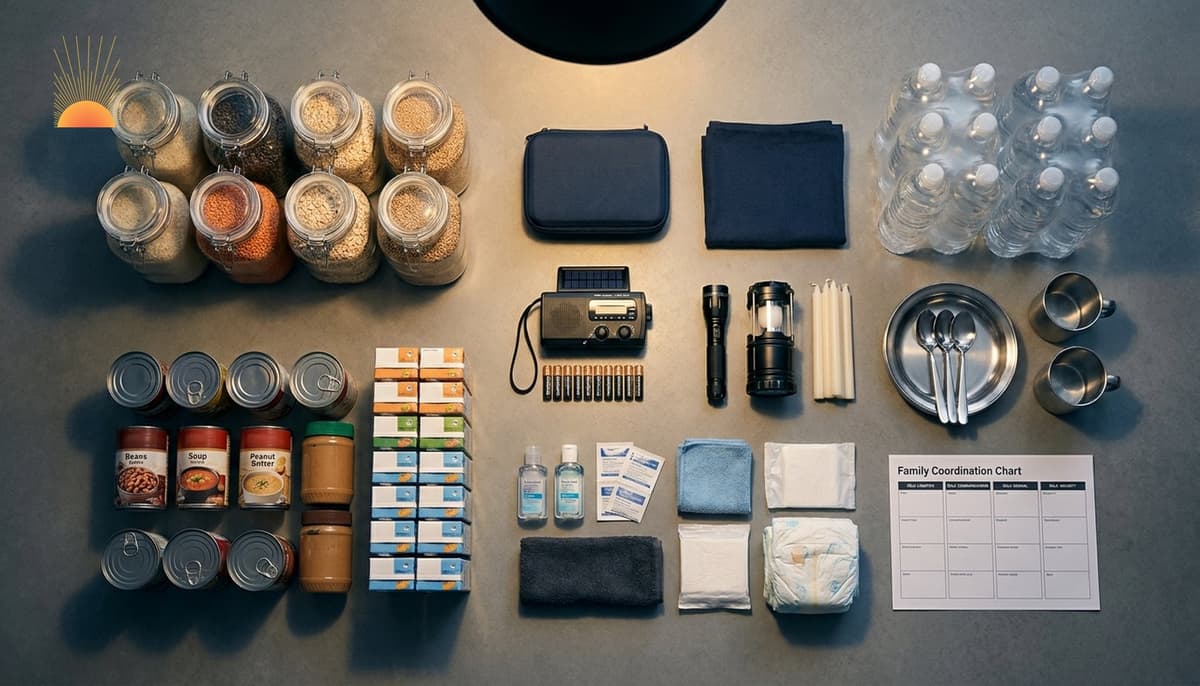
Overhead view of an organised household emergency preparedness layout with food, water, hygiene supplies, communication, and lighting essentials
Emergency Medicine

Civilian Emergency Preparedness Manual: Complete Household Living, Food, Water, Hygiene, Sanitation, Lighting, Personal Items & Family Coordination System

A practitioner's manual for running the household as a self-contained survival system during emergency shelter conditions — food, water, hygiene, sanitation, lighting, communication, waste, and family coordination operating as a single controlled unit.

Golden Hour PharmaApril 24, 20264 min read

1. Core Principle

During emergency shelter conditions, the household functions as a self-contained survival system where food, water, hygiene, sanitation, lighting, communication, waste, and human coordination operate as a single controlled unit.

Sources: WHO Household Emergency Management Guidance; FEMA CERT Household Operations Framework

2. Family Coordination System

Information Lead

Official alerts only.

Safety Lead

Structural safety, sealing, environment control.

Resource Lead

Food, water, supplies.

Care Lead

Children, elderly, medical support.

RULE: Only one interpretation of external information is allowed.

Sources: WHO RCCE Framework; FEMA Disaster Household Coordination Model

3. Food System

Food Stock

  • rice, wheat, oats, lentils
  • canned food, beans, peanut butter
  • almonds, walnuts, raisins, dates
  • apples, oranges, bananas
  • sugar, chocolate, glucose tablets
  • sealed bottled water, tetra-pack juices

Source: FAO Emergency Food Security Guidelines

Rules

  • small portions only
  • never leave food exposed
  • cover immediately if unfinished
  • controlled eating zones only

4. Crockery System

  • stainless steel plates/bowls
  • metal spoons/forks
  • covered cups

RULE: Eat → cover → store immediately.

Source: CDC Food Safety Emergency Guidance

5. Disposable Crockery System

Allowed when water is limited or contaminated.

Rules

  • single use only
  • no reuse
  • use in controlled eating area

Disposal

  • segregate waste
  • compress if possible
  • seal in bags
  • store in fixed waste zone
  • no external disposal during emergency phase

Sources: WHO Emergency Food Safety; FEMA Waste Guidance

6. Water System

  • 3–4 liters per person per day
  • 7–14 day minimum reserve

RULE: Pour into cup, no direct drinking from bottle.

Source: WHO Emergency Water Management Guidelines

7. Contaminated Water Rule

If water is contaminated:

No drinking. No cooking. No bathing. No utensil washing.

Only sealed or officially treated water allowed.

8. Hygiene System

  • sanitizer (primary)
  • bottled water rinse
  • damp cloth wiping

Body Cleaning

  • sponge cleaning
  • cloth wiping

Wipes

  • cotton cloth
  • microfiber cloth
  • alcohol wipes
  • wet wipes

Source: WHO Emergency Hygiene Guidelines

9. Shower System

  • short shower if safe water available
  • no shower if water contaminated
  • sponge/cloth cleaning instead

Focus: face, hands, underarms, groin, feet.

10. Washroom System

  • controlled use
  • lid closed before flushing
  • manual flushing if needed

If water contaminated:

  • reduced flushing
  • stored water only
  • temporary waste isolation

Source: WHO WASH Emergency Protocols

11. Cleaning System

  • dry wipe first
  • damp wipe with safe water
  • minimal water usage
  • essential surfaces only

12. Clothing System

  • reuse clothing if safe
  • minimal washing cycles
  • separate used clothing
  • hygiene priority over laundry

13. Personal Hygiene & Grooming

Allowed

  • nail cutting
  • deodorant
  • basic hygiene

Not Priority

  • perfumes
  • makeup
  • cosmetic routines

Source: WHO Emergency Shelter Standards

14. Jewellery, Watches & Valuables

  • jewellery stored securely in sealed container
  • watches used for timekeeping during power loss

Source: FEMA Household Asset Protection Guidance

15. Mobile Phones & Electronics

  • emergency use only
  • low power consumption
  • protected from heat/moisture

Source: ITU Disaster Communication Guidance

16. Radio System

  • battery or crank radio essential
  • primary official information source during network failure
  • spare batteries stored separately

Source: FEMA Emergency Broadcast System

17. Battery System

  • AA/AAA/rechargeable batteries stored safely
  • dry, cool storage
  • no mixing old/new batteries

Priority

  1. lighting
  2. communication
  3. essential devices

Source: FEMA Energy Continuity Guidance

18. Electronic Priority System

High
  • torch
  • phone
  • radio
Medium
  • smartwatch
Low
  • entertainment devices

19. Lighting System

  • LED torch (primary)
  • LED lantern (secondary)
  • hand-crank light

Candles (Last Resort Only)

Stable surface. Never unattended. Fire risk control required.

Sources: NFPA Candle Safety; FEMA Power Outage Protocols

20. Sleeping System

  • inner rooms only
  • away from windows/external walls
  • central zones preferred

Source: CDC Shelter Safety Guidance

21. Core Household Principle

A survival household must maintain:

Controlled consumption. Hygiene discipline. Communication structure. Waste containment. Lighting resilience. Coordinated roles.

22. Hygiene Support System (Diapers, Pads & Continence Care)

During emergencies, absorbent hygiene products become essential for infants, elderly, and menstrual hygiene.

Sources: WHO WASH Emergency Guidelines; UNICEF Hygiene Kit Standards

Types
  • baby diapers
  • adult diapers
  • sanitary pads
Use Rule
  • change regularly
  • maintain hand hygiene before/after use
  • avoid prolonged use to prevent infection risk
Storage
  • keep sealed and dry
  • separate from food and water supplies
Disposal
  • wrap immediately after use
  • double-bag if possible
  • store in sealed waste zone
  • never flush diapers or pads

Sources: WHO MHM Guidelines; CDC Sanitation Waste Protocols

Final Principle

A fully prepared household is defined by its ability to:

Control resources. Maintain hygiene discipline. Manage waste safely. Ensure communication continuity. Sustain life functions under infrastructure failure.

Pharmaceutical Preparedness

Ready When It Matters Most

Golden Hour Pharma supports healthcare systems, institutions, and emergency preparedness efforts with critical medicines, strategic supply planning, and responsive pharmaceutical support across high-risk environments.

WHO-GMP Certified · Strategic Stockpiling · Emergency Supply