
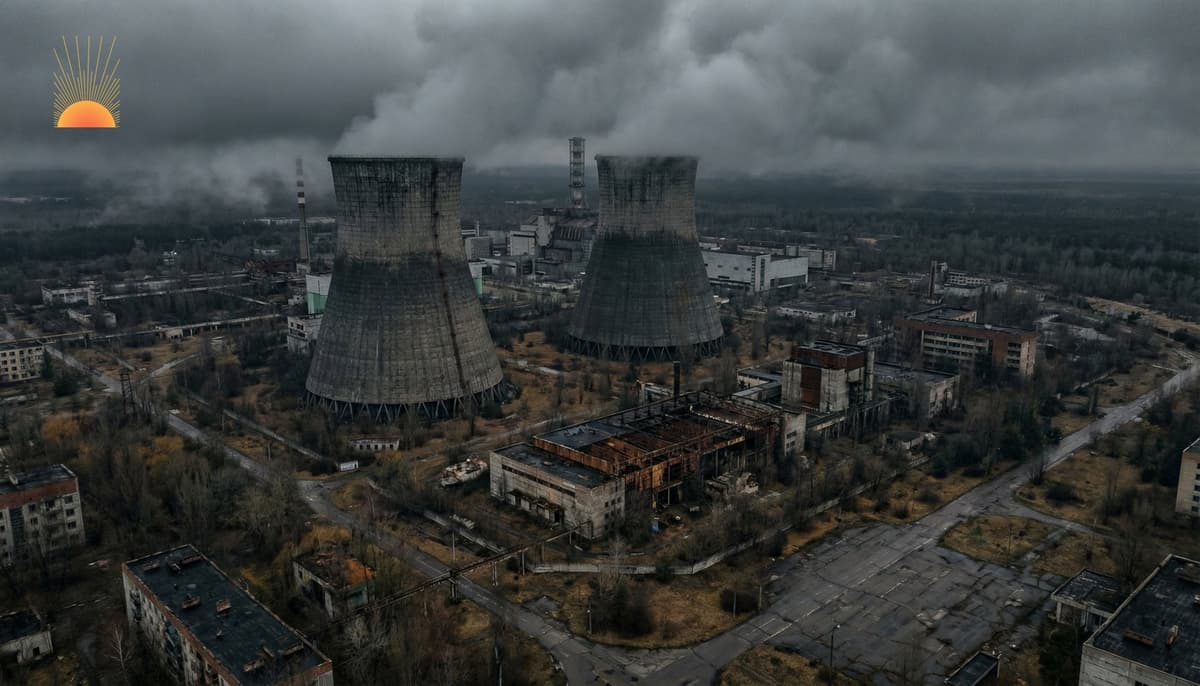
On April 26, 1986, Reactor 4 at the Chernobyl Nuclear Power Plant in Soviet Ukraine exploded during a routine safety test — releasing an estimated 400 times more radioactive material than the atomic bombs dropped on Hiroshima and Nagasaki combined. What followed was not just a nuclear accident. It was a simultaneous collapse of healthcare systems, emergency logistics, and national economic infrastructure — with no established protocol to follow.
Chernobyl is the definitive case study in what happens when preparedness is treated as optional. Its lessons in antidote availability, evacuation speed, and institutional readiness remain as urgent today as they were the morning the reactor exploded.
How the Chernobyl Disaster Unfolded
The explosion at Chernobyl was not a single event. It was a cascading failure triggered by a combination of design flaws in the RBMK-1000 reactor and critical operator errors during a low-power safety test. In the early hours of April 26, 1986, an uncontrolled power surge caused a steam explosion that destroyed the reactor core, blew off the 1,000-tonne reactor lid, and exposed the burning graphite core to the open atmosphere.
The graphite fire that followed burned for approximately 10 days, continuously releasing radioactive material into the atmosphere across the Soviet Union and Western Europe. Unlike a nuclear detonation, this was a sustained, multi-day radiological release — meaning contamination was not a single event but a progressive, accumulating emergency with no clear end point.
The sequence of events that led to the explosion included an unstable reactor operating at low power, withdrawal of control rods beyond safety limits, and a sudden uncontrolled power excursion that the system's emergency shutdown mechanism could not prevent. According to the IAEA's official Chernobyl assessment, the reactor design's positive void coefficient — a known but officially downplayed flaw — was a primary contributing factor.
What Was Released: The Five Critical Isotopes
The Chernobyl release was not a single contaminant. The reactor core expelled a cocktail of radioactive isotopes, each with distinct biological pathways, half-lives, and geographic distribution patterns. Understanding what was released explains both the immediate deaths and the long-term cancer burden observed across affected populations.
| Isotope | Half-Life | Primary Health Risk | Geographic Reach |
|---|---|---|---|
| Iodine-131 | 8 days | Thyroid cancer — concentrated by thyroid gland, particularly dangerous in children | Continental Europe, concentrated near reactor |
| Caesium-137 | 30 years | Long-term land and food contamination; internal exposure via ingestion | Wide dispersal — detected across Europe |
| Strontium-90 | 29 years | Bone marrow damage; accumulates in bone tissue, disrupts haematopoiesis | Primarily within 30 km exclusion zone |
| Xenon-133 | 5 days | Atmospheric spread marker; inert but enabled radiation plume tracking | Global atmospheric distribution |
| Plutonium isotopes | Thousands of years | High localised toxicity; alpha emitter — severe risk if inhaled or ingested | Confined to near-reactor zones |
Of these, iodine-131 and caesium-137 caused the most documented harm. Iodine-131's short half-life made it acutely dangerous in the days and weeks after the explosion — particularly for children whose thyroid glands absorbed concentrated doses. Caesium-137's 30-year half-life ensured that land contamination persisted for decades, affecting agriculture, water systems, and food chains across three countries.
Health Consequences: From Acute Deaths to Long-Term Cancer
The health toll of Chernobyl unfolded in three distinct waves: immediate deaths in the first hours, acute radiation syndrome (ARS) deaths in the weeks that followed, and a long-term cancer burden that continues to be monitored today.
According to the joint WHO/IAEA assessment, the Chernobyl Forum estimated approximately 3,940 deaths from radiation-induced cancer and leukaemia among the 200,000 emergency workers from 1986–1987, 116,000 evacuees, and 270,000 residents of the most contaminated areas. Beyond this group, an additional 5,000 deaths are projected among the wider population of 600 million exposed to lower doses across Europe.
Immediate deaths: Two plant workers died in the initial explosion. Twenty-eight firefighters and plant workers died within weeks from severe acute radiation syndrome — the highest doses in recorded occupational radiation history.
Thyroid cancer in children: This is Chernobyl's most clearly documented long-term harm. Iodine-131 concentrates in the thyroid gland, and children drinking contaminated milk in the weeks after the explosion received disproportionately high doses. According to the United Nations Scientific Committee on the Effects of Atomic Radiation (UNSCEAR), 19,233 thyroid cancer cases were registered between 1991 and 2015 in individuals who were under 18 in 1986 across Belarus, Ukraine, and the most contaminated regions of Russia.
Acute Radiation Syndrome (ARS): The firefighters and first responders who arrived without protective equipment received doses sufficient to cause bone marrow failure, gastrointestinal tract destruction, and multi-organ failure. There was no structured nuclear disaster medical protocol. Treatment relied on improvised intensive care with no established pharmaceutical countermeasure pathway in place.
Critical Gap: No structured nuclear disaster medical protocol existed in 1986. First responders were deployed without adequate dosimetry equipment, protective gear, or pharmaceutical countermeasures. The system had to be invented in real time, under crisis conditions, with 28 lives already lost in the first weeks.
Evacuation, Screening, and Emergency Response
The Soviet government's initial response was characterised by delayed public communication and an underestimation of the disaster's scale. The 30 km exclusion zone around the plant was established, and approximately 116,000 residents were evacuated within two weeks — but the delay in announcing the full scale of the emergency meant that many civilians in affected zones had already consumed contaminated water, milk, and food before protective measures were in place.
The military was rapidly deployed. Approximately 600,000 workers — known as liquidators — were mobilised over the following years for cleanup, containment construction, and decontamination operations. Many worked under dangerous conditions with inadequate protection and were not fully informed of the risks they were taking. The construction of the concrete sarcophagus encasing Reactor 4 was completed by November 1986, but the long-term monitoring burden it created continues to this day.
- April 26: Explosion occurs at 01:23 local time — fire crews arrive without radiation protection
- April 27: Evacuation of Pripyat begins — 36 hours after the explosion
- May 2: 30 km exclusion zone formally established
- May–June: Mass relocation of ~116,000 residents from high-contamination zones
- November 1986: Reactor sarcophagus construction completed
- 1986–1990: ~220,000 additional residents relocated from wider contaminated areas
- Moscow's Clinic No. 6 received the most severely irradiated patients
- International medical teams consulted — including Dr. Robert Gale from UCLA
- Bone marrow transplants attempted in the most critical ARS cases
- Entire exposed populations enrolled in long-term health monitoring programmes
- Hospitals overwhelmed with an emergency they had no protocol to manage
The Antidote Gap: Prussian Blue and Potassium Iodide
One of the most significant preparedness failures at Chernobyl was the absence of approved, stockpiled pharmaceutical countermeasures. Both key nuclear antidotes — Prussian Blue for caesium-137 internal contamination and potassium iodide for thyroid protection — were either unavailable, unapproved, or distributed too late to be effective.
Prussian Blue (ferric hexacyanoferrate) — the indicated treatment for internal caesium-137 contamination — was not part of the Soviet emergency pharmaceutical system and was not stockpiled. It had not yet received regulatory approval in most countries as a pharmaceutical countermeasure, despite evidence of its effectiveness. None of the 28 firefighters who died from ARS received Prussian Blue treatment. Learn more about Prussian Blue as a radiological countermeasure.
Potassium iodide (KI) — which saturates the thyroid gland with stable iodine, blocking absorption of radioactive iodine-131 — was partially distributed in the days after the accident. However, the distribution was inconsistent and delayed. In Poland, KI was distributed within days to millions of children. In much of the Soviet-controlled contaminated zone, distribution was delayed or incomplete. The window for effective thyroid protection is narrow: KI must be taken before or immediately after exposure to be effective. For thousands of children who developed thyroid cancer, the intervention came too late or not at all.
Preparedness Lesson: Potassium iodide is only effective within a narrow time window before or shortly after iodine-131 exposure. Stockpiling alone is insufficient — pre-positioned distribution systems, public communication protocols, and logistics networks must already exist before a crisis begins. Explore Golden Hour Pharma's full nuclear antidote range.
Economic Cost: $235 Billion in Damage
The financial impact of Chernobyl is difficult to quantify fully — but the estimates that exist are staggering. The IAEA and associated research bodies estimate total economic damage at approximately US$235 billion, making it one of the most expensive industrial accidents in recorded history.
| Cost Category | Description |
|---|---|
| Evacuation and relocation | Displacement and resettlement of 336,000+ people, including permanent housing construction in new settlements |
| Decontamination operations | 600,000 liquidators deployed over years; removal of contaminated topsoil across vast areas |
| Agricultural land loss | Hundreds of thousands of hectares rendered unusable; decades of lost agricultural production |
| Healthcare and monitoring | Long-term medical surveillance of millions; treatment programmes still ongoing 40 years later |
| Infrastructure abandonment | Entire city of Pripyat (50,000 residents) permanently abandoned; regional economic collapse |
| Energy sector losses | Loss of reactor capacity, increased energy costs, post-accident regulatory shutdowns across the Soviet grid |
For perspective: Chernobyl was a reactor accident, not a deliberate nuclear attack or a nuclear weapon detonation. The scale of damage from a modern nuclear event in a densely populated region would multiply these figures exponentially — across multiple countries simultaneously, with healthcare systems already overwhelmed from other demands.
Modern Preparedness: What Has Changed Since 1986
Chernobyl fundamentally reshaped international nuclear safety and emergency preparedness frameworks. The WHO and IAEA both expanded their emergency response mandates in the years following the accident. National emergency frameworks were revised. Radiation monitoring networks were extended. Medical countermeasure stockpiling began to be taken seriously as a policy priority.
Modern improvements include:
- National emergency response frameworks: Most OECD nations now have formal nuclear and radiological emergency plans with pre-defined evacuation zones, communication protocols, and pharmaceutical distribution networks
- Radiation monitoring systems: Continuous environmental radiation surveillance networks operate across Europe and North America, providing real-time contamination data
- Medical countermeasure stockpiles: Potassium iodide, Prussian Blue, and DTPA (for plutonium/americium decontamination) are now approved and stockpiled by many national health agencies
- Faster evacuation protocols: Pre-planned evacuation routes and public alert systems now exist in most countries with nuclear infrastructure
However, these improvements are not universal. The Emergency Preparedness landscape in 2026 remains deeply uneven. Low- and middle-income countries — many of which sit within the potential fallout zones of nuclear facilities or in geopolitically volatile regions — have limited stockpiles, fragmented logistics systems, and constrained healthcare capacity. WHO and IAEA have both issued repeated warnings about rising nuclear risk awareness in the context of geopolitical conflict. Preparedness is improving, but it is not yet adequate — and it is not evenly distributed.
Current Reality: The WHO and IAEA have repeatedly emphasised that stockpile availability varies significantly worldwide, logistics breakdowns remain a major risk factor, and emergency procurement delays persist across many health systems. Conflict zones and low-income regions face the highest vulnerability — and the lowest current preparedness.
The Role of Reliable Supply in Global Emergency Readiness
Chernobyl proved that nuclear disasters are not only technical failures — they are healthcare collapses, logistics breakdowns, and economic catastrophes occurring simultaneously. The lesson for procurement planners and government health ministries is straightforward: the moment a crisis begins is too late to source critical medicines.
Golden Hour Pharma operates as a WHO-approved pharmaceutical manufacturing facility built specifically to strengthen global emergency medical readiness and critical care supply resilience. The company manufactures and supplies through established regional partnerships across more than 30 countries — ensuring that essential medicines are available before a crisis materialises, not after.
Manufacturing capabilities include:
- Tablets and capsules
- Syrups and oral liquids
- Sterile injectables (vials and ampoules)
- Ointments and topical formulations
- Emergency critical care medicines
- Radiological countermeasures including Prussian Blue and Potassium Iodide
In real-world emergency conditions, healthcare systems encounter price instability, supply shortages, logistics disruption, and procurement delays simultaneously. Where others struggle with price and delivery, Golden Hour Pharma ensures continuity, reliability, and readiness. Learn why institutions across 30+ countries partner with Golden Hour Pharma.
Chernobyl cost an estimated US$235 billion. The antidotes that could have reduced harm — Prussian Blue and potassium iodide — were either absent or delayed. The lesson is not complex: pre-positioned supply, established logistics, and reliable manufacturing partnerships are not optional line items in a national health budget. They are the difference between a manageable crisis and a generational catastrophe.
Procurement Resources
- Prussian Blue (Ferric Hexacyanoferrate) — Radiation Decontamination Supplier
- Potassium Iodide (KI) — Pharmaceutical Grade Institutional Supply
- Potassium Iodate (KIO3) — Thyroid Protection for Institutional Stockpiles
- Full Nuclear Emergency Antidote Range
- Emergency Medicine Procurement — Institutional Supply Partner